












Tokyo Stillness
See Tokyo, differently.
History, Culture & Artisans 2026.11.20
Hatsumode at Meiji Jingu: New Year Prayers and Timeless Festival Traditions in Tokyo
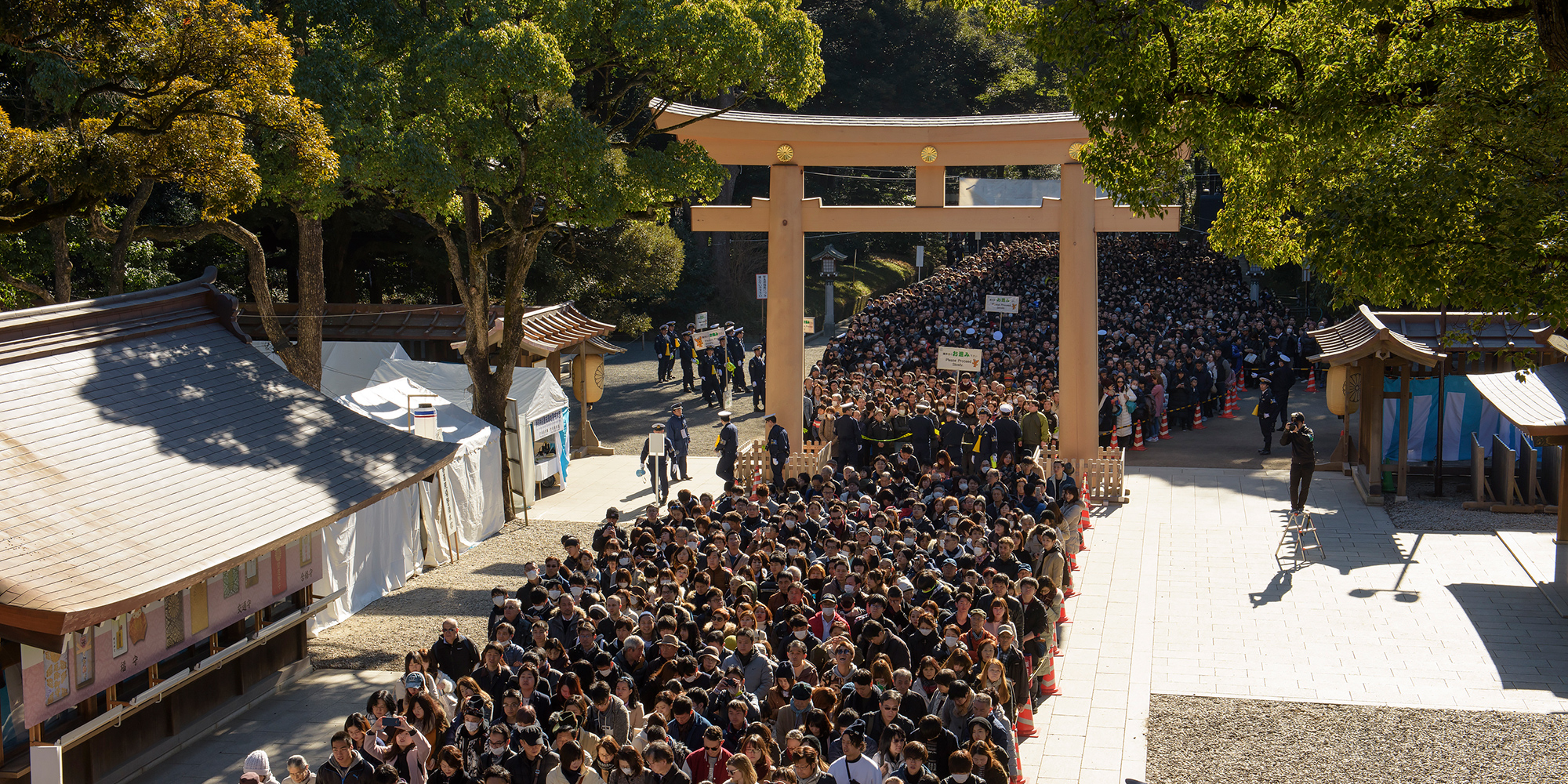
With the arrival of the New Year, people across Japan flock to shrines and temples to offer their first prayers of the year—a cherished custom known as hatsumode. In the heart of Tokyo, few places capture the spirit of this annual pilgrimage quite like Meiji Jingu.
Though nestled just steps from the energetic pulse of Harajuku, the shrine is surrounded by an expansive, tranquil forest that draws millions of visitors every year. The sprawling grounds offer a wealth of sights to explore, from monumental torii gates and striking displays of donated sake barrels to the serene Inner Garden associated with Emperor Meiji. Visitors during the autumn festival can even witness the beauty of traditional Japanese performing arts firsthand.
Guided by Tomonori Ishida of the Meiji Jingu Public Relations Office, we set out to explore how Japan welcomes the New Year and how the shrine’s enduring traditions continue to be passed down through generations.
Meiji Jingu: Where Tokyo Gathers to Welcome the New Year
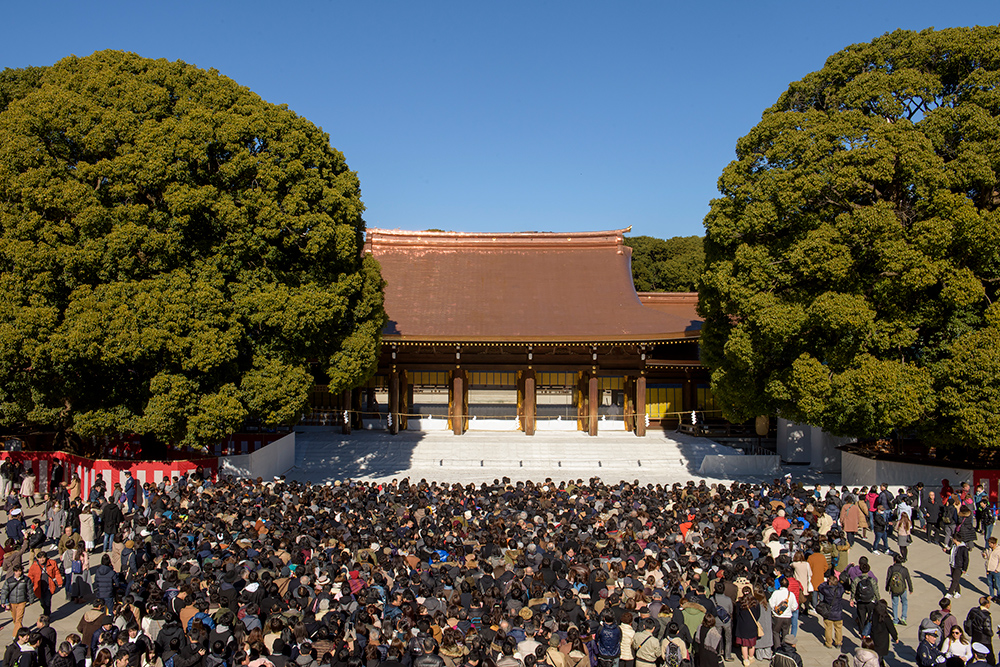
Dedicated to Emperor Meiji and Empress Shoken, Meiji Jingu was established in 1920. Situated close to the lively districts of Harajuku and Omotesando, this sacred sanctuary welcomes visitors from across Japan and around the world.
The shrine is at its busiest during the New Year festivities. An estimated three million people stream through its forested paths over the first three days of January alone, cementing Meiji Jingu's place as one of Tokyo’s most iconic hatsumode destinations.
In Japanese culture, the beginning of the year is traditionally a time to give thanks for having safely made it through the past year and to pray for health, prosperity, and happiness in the months ahead.
Peak crowds gather around midnight on New Year’s Eve and throughout the daytime hours from January 1 through 3. If you prefer to avoid these crowds, plan your visit for the early morning just after the gates open. January 2 and 3, in particular, remain wonderfully serene during the early hours before the daytime crowds arrive.
Torii Gates, Sake Barrels, and French Wine: Stories Along the Approach
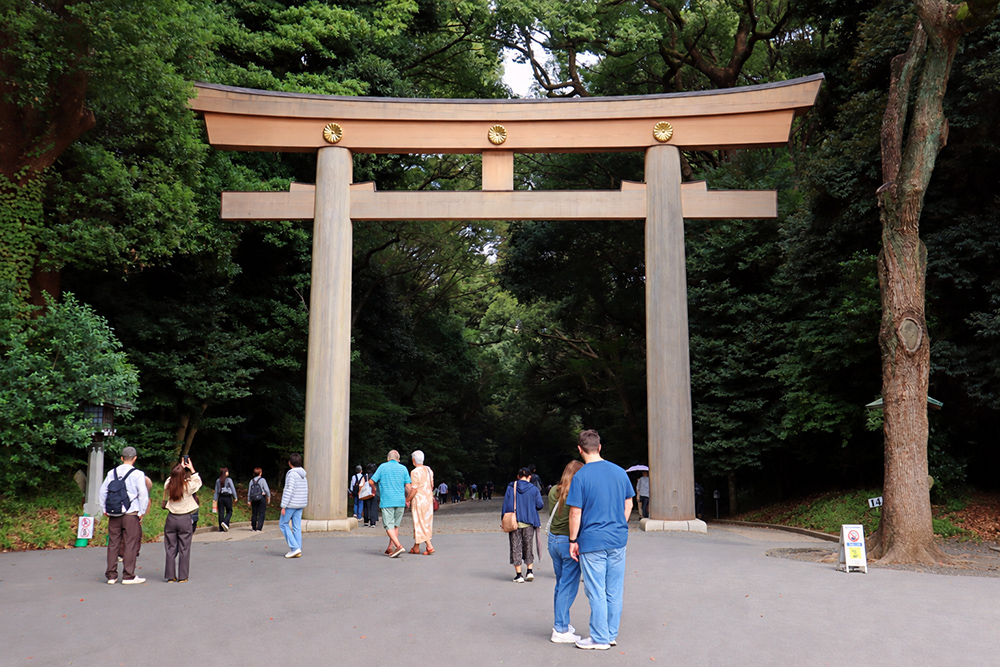
A visit to Meiji Jingu offers far more than a moment of worship. As Ishida led us along the paths, he shared the fascinating stories behind several of the grounds’ most celebrated landmarks.
Among the first sights to captivate the eye is the First Torii, standing tall at the entrance of the southern approach near JR Harajuku Station.
Soaring approximately 10 meters high and spanning 15 meters wide, this monumental gate was rebuilt in 2022 for the first time in roughly a century, its pillars hewn from prized Yoshino cedar grown in Nara Prefecture.
“Finding timber worthy of a torii this grand is extremely difficult,” Ishida explained. “You never truly know what the knots and inner conditions are like until the tree has been cut and planed.”
He pointed out that the massive pillars extend deep into the ground, preserved using time-honored craftsmanship that includes wrapping vulnerable sections of the timber in protective copper sheeting.
Follow the cedar-shaded approach further into the woods, and you will come upon an eye-catching wall of sake barrels.
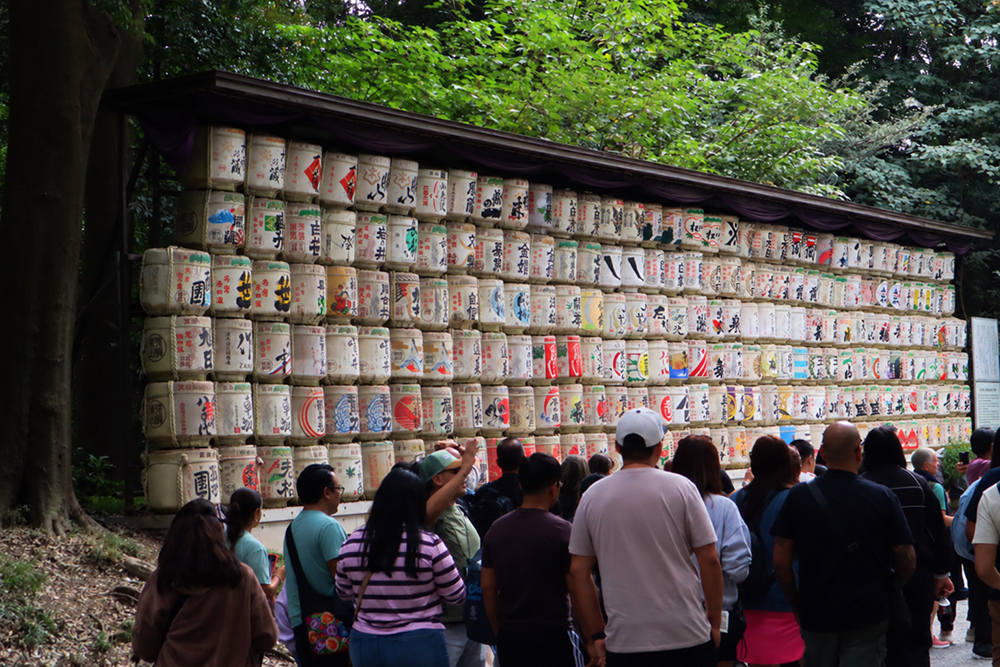
Known as komodaru, these decorative casks have been donated by sake brewers and trade guilds across Japan. Sake has deep ties to Shinto ritual, and spirits presented as offerings to the deities are known as omiki.
“They are gifted every year to mark the New Year,” Ishida said. “We receive so many that we had to expand the display area just to accommodate them all.”
Look across the path, however, and you will find something more unexpected: tier upon tier of wine barrels.
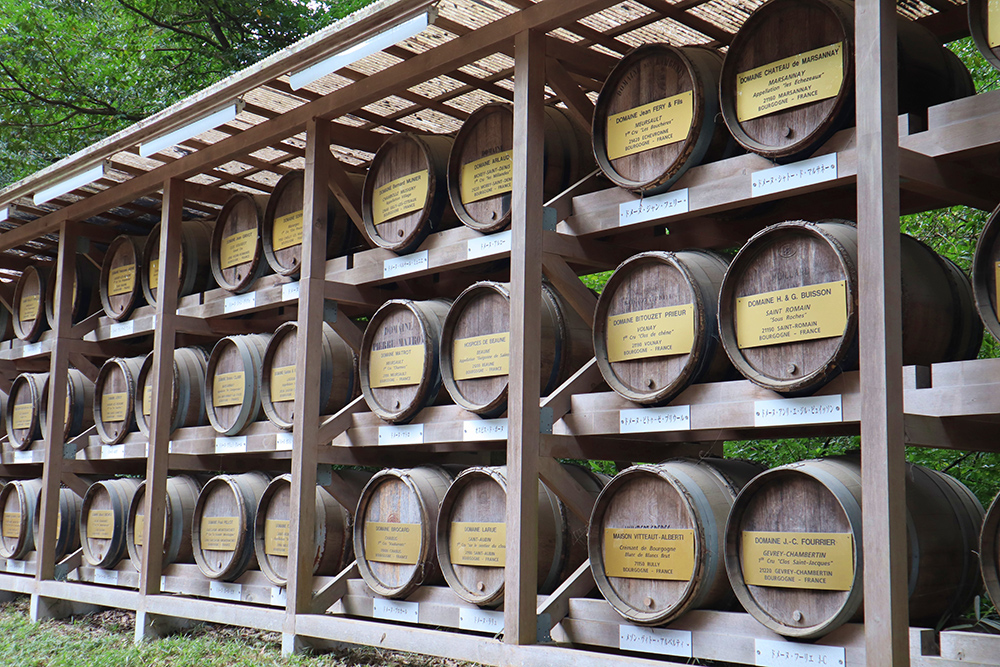
These barrels were donated by wineries in Burgundy, France, a unique tradition inspired by Emperor Meiji’s renowned taste for wine.
Facing one another across the walkway, Japanese sake and French wine form a striking tableau—a poetic nod to the Meiji era, when ancient Japanese traditions first embraced and blended with Western culture.
Seasonal Splendor in the Inner Garden
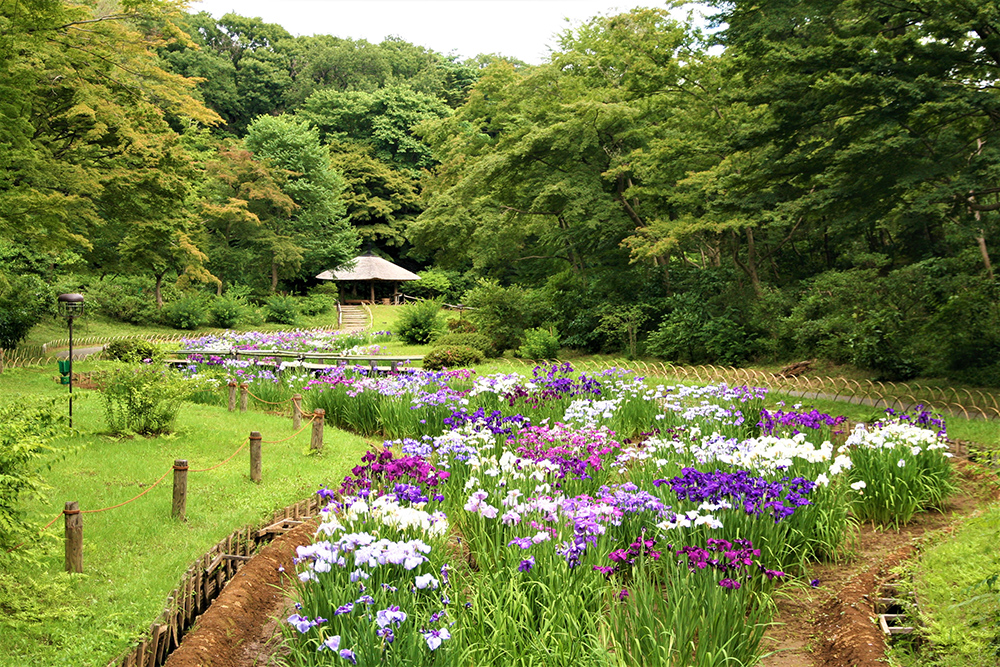
The iris garden reaches its peak in June.
If your schedule allows, take the time to wander into the Meiji Jingu Inner Garden.
During the Edo period, these verdant grounds formed part of the estates of the prominent Kato and Ii clans, and Empress Shoken is said to have frequently strolled their winding paths during the Meiji era.
The enchanting iris garden was established after Emperor Meiji ordered the blossoms to be planted especially for the Empress. According to Ishida, each variety has its own name, carefully nurtured by specialist staff to this day.
While iris blossoms typically reach their peak in June, the garden offers something different with each season: Delicate azaleas bloom in spring, while vibrant foliage paints the scenery from late fall into early winter.
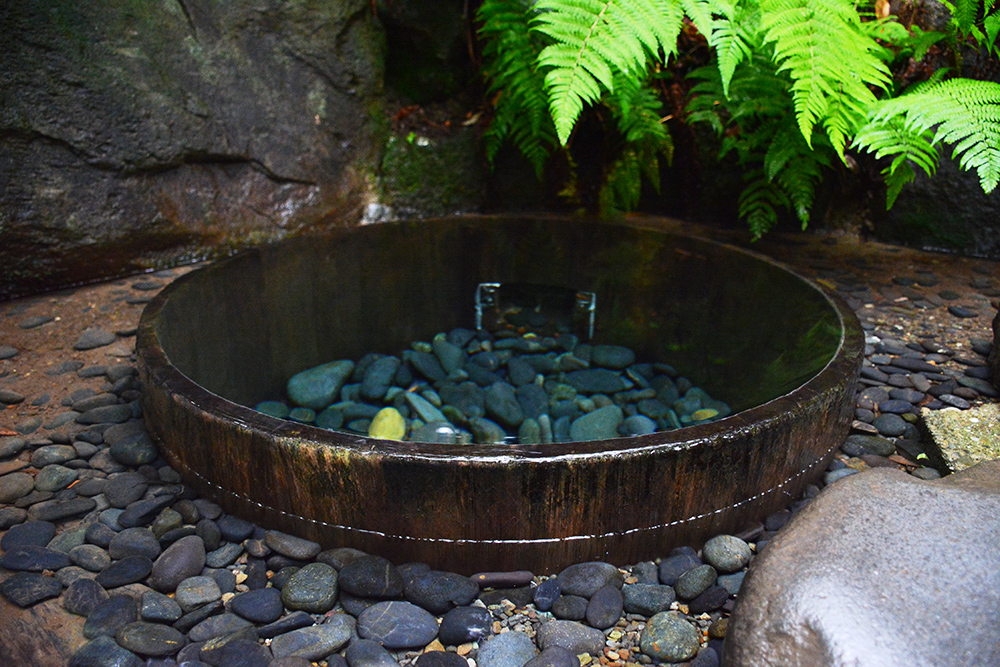
Deeper within the grounds lies Kiyomasa’s Well, reputedly dug by the legendary feudal lord Kato Kiyomasa. Crystal-clear spring water still bubbles up from its depths today, earning it a spot among Tokyo’s 57 most celebrated natural springs. In recent years, it has captured the popular imagination as a revitalizing “power spot,” attracting curious travelers and spiritual seekers alike.
A stroll through the Inner Garden serves as a reminder that Meiji Jingu's serene beauty is worth experiencing not only for hatsumode, but throughout the year.
Yabusame, Bugaku, and Ancient Traditions at the Autumn Grand Festival
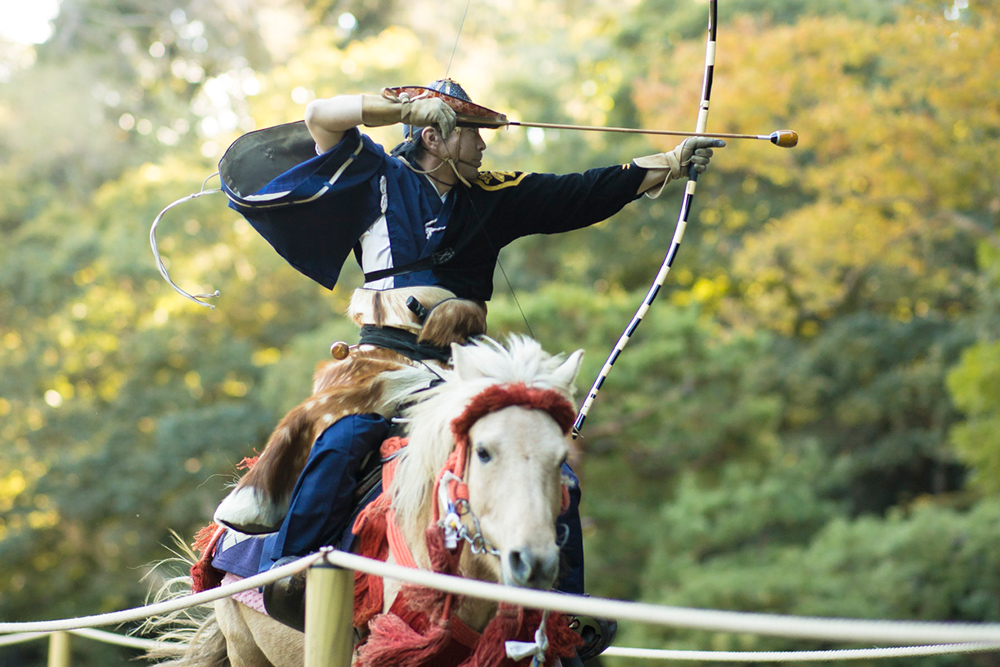
“If I could recommend just one festival to experience, it would undoubtedly be our autumn celebration,” Ishida said.
Held each year on November 3 in honor of Emperor Meiji’s birthday, the Autumn Grand Festival stands as one of the shrine’s most venerated observances. Throughout the festivities, a variety of performances and ceremonies are presented as offerings.
“We set up a stage right in front of the main sanctuary where bugaku, Noh and Kyogen, and traditional Japanese music are performed,” Ishida explained. “Visitors are welcome to gather around and watch. While seating is limited, you can also watch while standing.”
Among the festival's most captivating highlights is bugaku, an ancient imperial court dance set to the ethereal melodies of gagaku music. Swathed in brilliantly colored, ornate silks, the dancers move with mesmerizing grace to the sounds of traditional instruments. According to Ishida, several pieces are usually performed over the course of nearly an hour, offering an exceptionally rare opportunity to witness classical Japanese performing arts up close within the grounds of a Shinto shrine.
Another spectacle of the Autumn Grand Festival is yabusame.
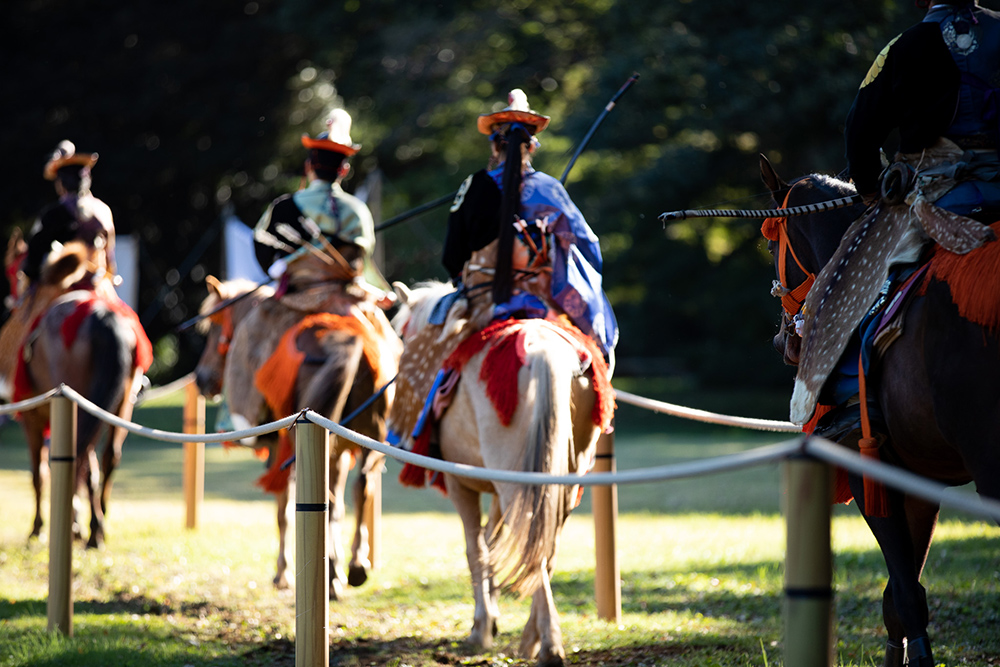
In this traditional form of mounted archery, archers fire arrows at targets while riding a horse at full speed. At Meiji Jingu, this sacred ritual is demonstrated by the archers of the Dai-Nippon Kyubakai.
“November 3 features all kinds of magnificent performances,” Ishida shared. “Events take place not only before the main sanctuary, but across the grounds, including the sweeping western lawn. Alongside yabusame, visitors can also enjoy Satsuma biwa and much more.”
While hatsumode is a time to express gratitude and offer prayers for the coming year, the shrine’s grand festivals open a vibrant window into Japan’s living heritage and time-honored classical arts.
If you’re traveling to Meiji Jingu, consider returning during its festival celebrations. It offers an opportunity to discover dimensions of Japanese culture that a quiet visit for prayer alone cannot fully reveal.
Experiencing a Japanese New Year in Tokyo
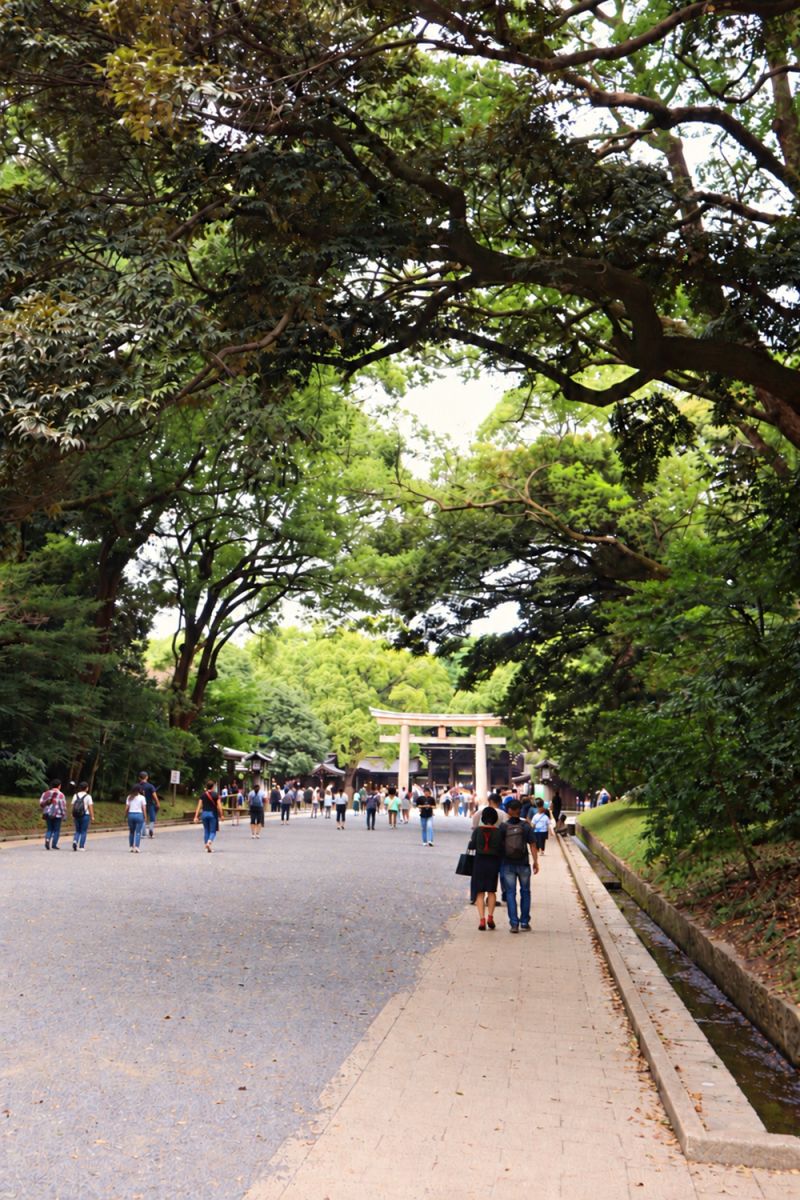
If you find yourself in Tokyo for the New Year, embarking on a hatsumode pilgrimage to Meiji Jingu is an experience not to be missed.
Journey from Hilton Tokyo Odaiba into the bustling heart of the capital, step through the towering wooden torii gate near Harajuku Station, and follow the path to the main sanctuary. Standing before the shrine and offering a heartfelt prayer lets you partake directly in one of Japan’s most cherished and enduring holiday traditions.
If you’re visiting at another time, make sure to check the shrine’s calendar for festivals and ceremonial events. You might just time your visit perfectly to witness the solemn elegance of bugaku or the thrilling spectacle of yabusame.
Offer prayers for happiness in the year ahead, or immerse yourself in Japanese culture through the shrine’s festivals and performing arts. Either way, time spent at Meiji Jingu can add another dimension to your Tokyo journey.
Meiji Jingu
1-1 Yoyogi Kamizono-cho, Shibuya-ku, Tokyo
Access: A short walk from JR Harajuku Station, or Meiji-jingumae (Harajuku) Station on the Tokyo Metro Chiyoda and Fukutoshin lines.
Admission: Free. (A ¥500 maintenance donation is requested for entry to the Meiji Jingu Inner Garden.)
Hours: Gate opening and closing times vary monthly based on sunrise and sunset.
Please consult the official website for New Year holiday hours, traffic advisories, and the festival performance calendar.


