





Tokyo Stillness
See Tokyo, differently.
History, Culture & Artisans 2026.10.16
With Every Step, a New Perspective on the City: A Public Art Walk Through Symbol Promenade Park
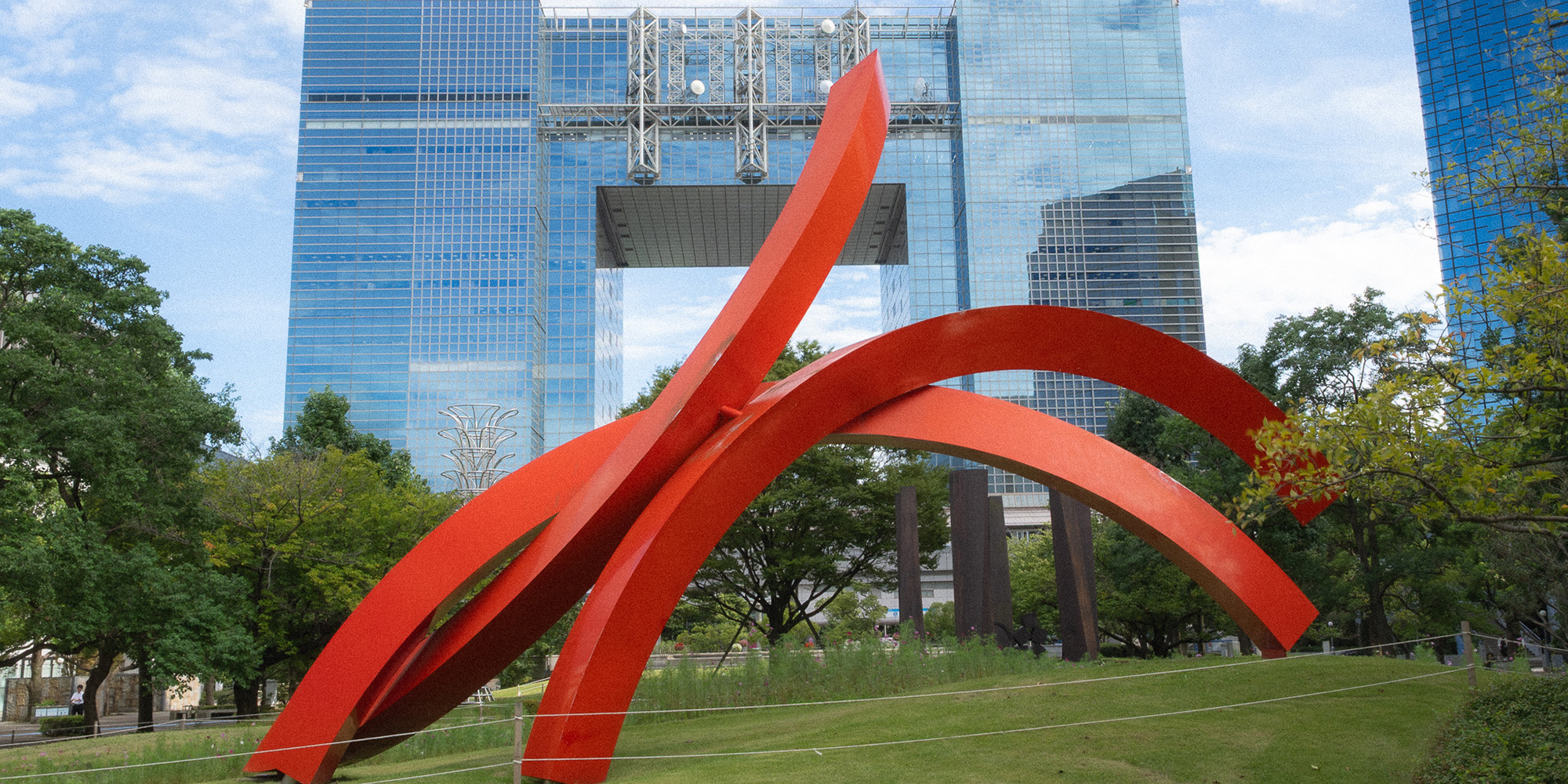
Autumn brings mild weather and one of the best times of the year for walking outdoors. From Hilton Tokyo Odaiba, head to Symbol Promenade Park, where five public art installations are placed across its plazas and walkways. Rather than viewing each piece in isolation, take in the way it interacts with the sky, greenery, and surrounding architecture—and enjoy Odaiba’s landscape as part of the experience.
A Promenade Through the City—and Through Art
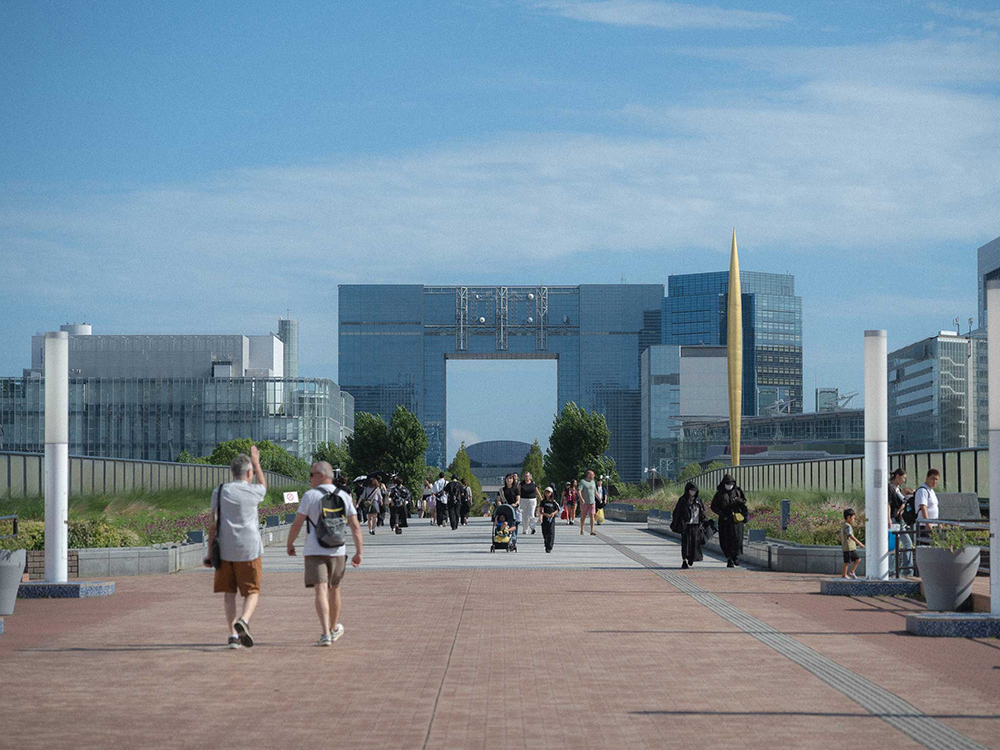
Step out of Hilton Tokyo Odaiba and make your way toward Symbol Promenade Park, with the sea breeze blowing gently. Connecting Aomi, Ariake, and Daiba, the park not only links sightseeing and shopping destinations but also invites you to slow down, with green spaces and plazas along the way.
As you walk, the tree-lined streets, buildings, and open sky create a dynamic backdrop, and public art begins to emerge within the cityscape. With no museum entrance and no prescribed route, you can explore at your own pace. Something that looks, from a distance, like part of the urban infrastructure may reveal itself to be an artwork as you approach.
There’s no need to read up on every title or interpretation beforehand. Simply stop at any installation or color that catches your eye. Observe it, circle to the side, then step back and take in how it relates to the surrounding cityscape. Discovering each piece at your own pace is part of what makes outdoor art so rewarding.
A Gate and a Flame That Reframe the City
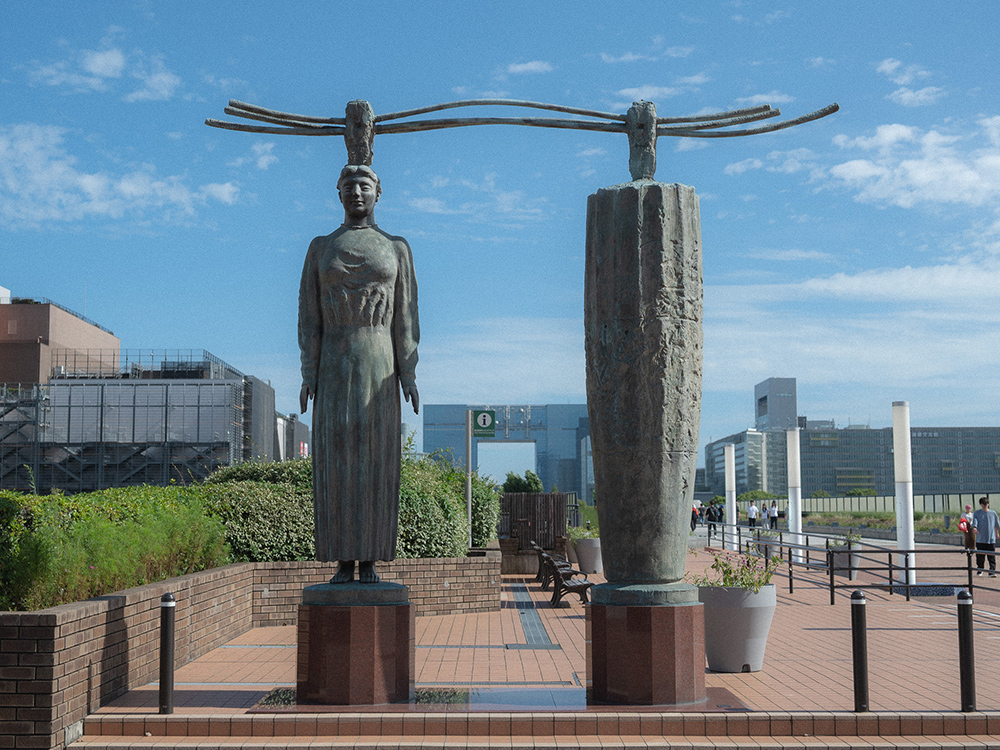
The first installation on your walk is The Gate of Venus, a sculpture by Souji Sugiyama. This monumental work resembles a gate, framing glimpses of the sky and buildings beyond. Rather than focusing solely on the sculpture, try viewing it as a frame for a piece of the city; familiar scenes suddenly take on a more defined outline.
From the front, the structure extends to either side, creating a sense of entrance to the city. Move closer, and the texture of the metal and the layering of its components come into focus. Walk around to the side, and the illusion of a gateway dissolves. This is a piece best understood from multiple angles, revealing its form as you move.
The Gate of Venus combines old and new elements, expressing hopes for a more livable world and for human happiness. With that in mind, the gate set amid Odaiba’s futuristic architecture can feel like a link between past and future. As we move through the city, perhaps we, too, are passing between the two.
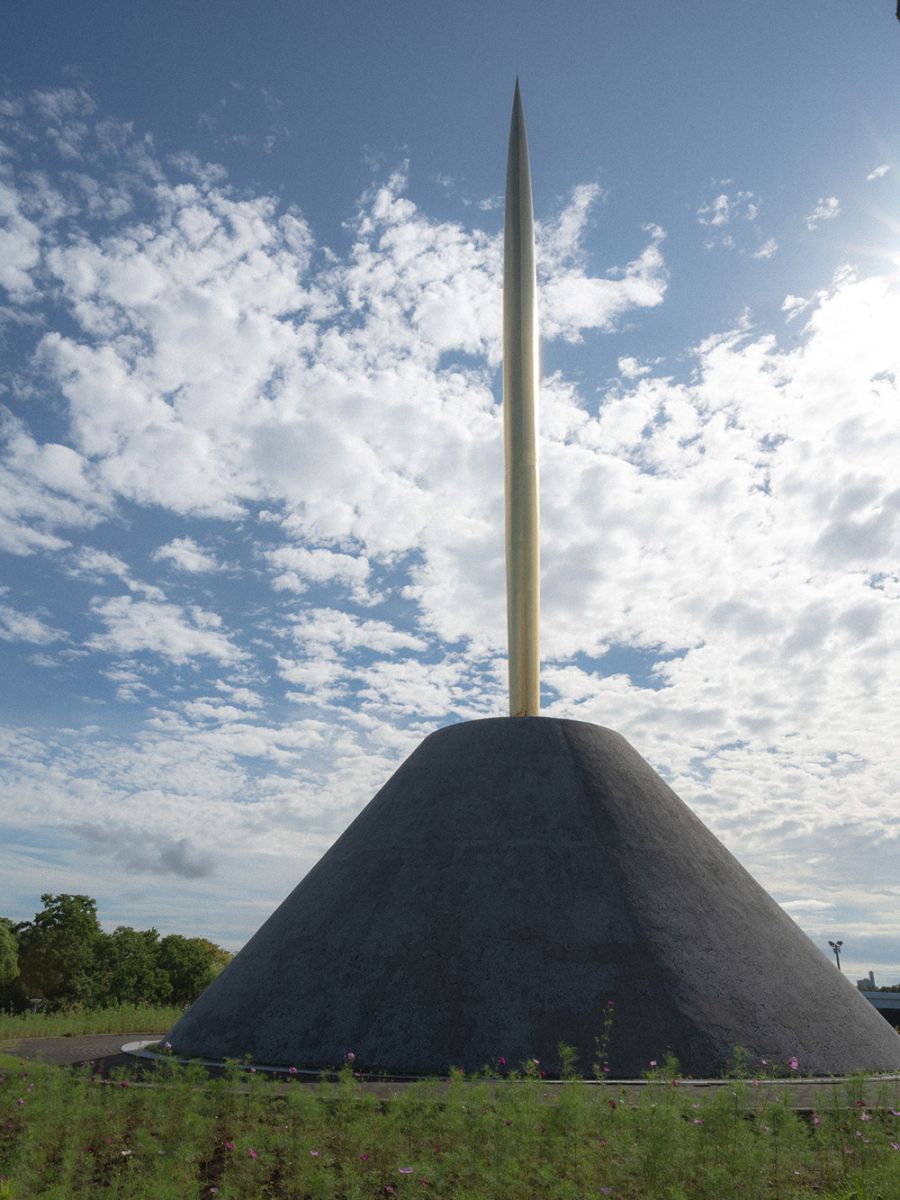
Continue on, look into the distance, and the Flame of Freedom comes into view, rising toward the sky. Designed by French sculptor Marc Couturier, the work was presented to Japan to commemorate cultural exchange between Japan and France and serve as a symbol of friendship between the two countries.
Standing approximately 27 meters tall, including its base, it has a striking vertical presence when viewed from below. Step farther back, however, and its vivid gold hue becomes a distinct landmark against the blue sky and surrounding architecture, naturally drawing the gaze upward.
While the Gate of Venus frames the surrounding cityscape, the Flame of Freedom makes you gaze toward the sky. Seen one after the other, these contrasting works demonstrate how public art can do more than just fill a space; it can change the way we see the landscape itself.
At Waterfall Square, Where Form Meets Nature
Leaving the two monumental works behind, continue along the promenade. Soon, the city’s bustle slowly fades as you arrive at Waterfall Square. Here, three pieces interact with the greenery, the water features, and the open sky overhead.
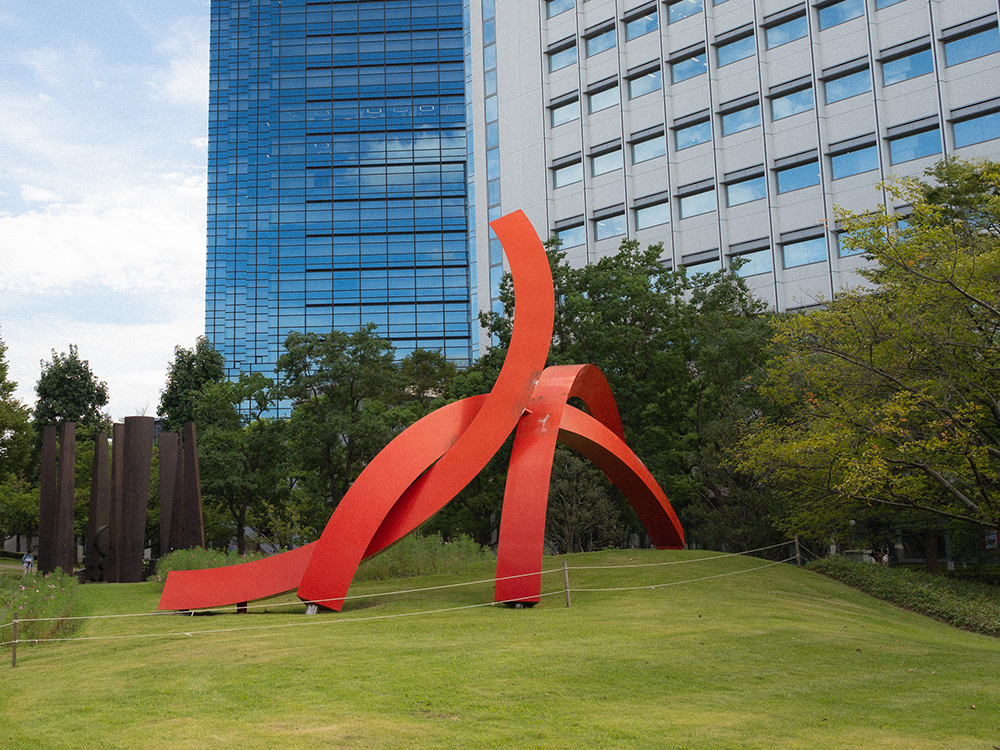
Haruyuki Uchida’s ROUND STRUCTURE 1995 is an approximately 13-meter-high sculpture composed of three arcs. If joined, these arcs would form a complete circle. The artist conceived this circle as “a universe” and “a source of life,” using sculptural form and color to express vitality and an upward-reaching spirit.
Up close, each arc stands as a separate, monumental structure. Step back or change positions, and the relationship between the arcs becomes noticeable, forming a cohesive whole. Walking around the installation and gradually discovering how its components come together is part of its appeal.
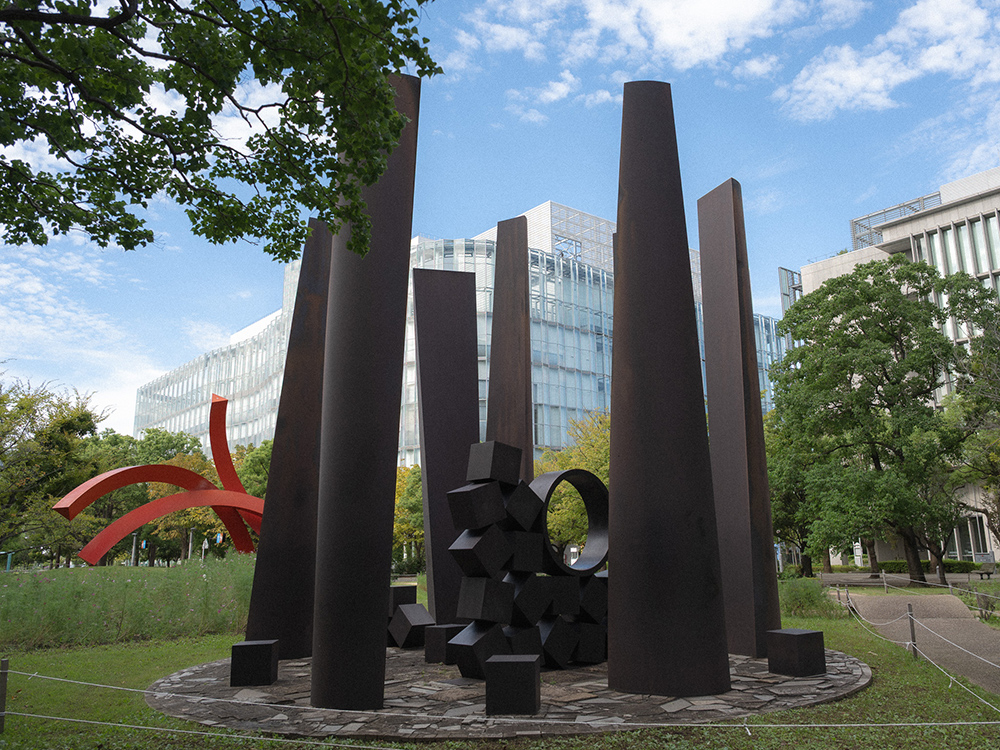
Just beyond is Shimon Saito’s Grove Without Gravity (重力の無い杜), an iron sculpture. Set within the city’s rectilinear surroundings, its cluster of forms creates a sense of depth, reminiscent of walking among trees. Although the material is sturdy and heavy, the open spaces between the forms allow for changing perspectives with every step.
The word “grove” in the Japanese title evokes a tranquil place surrounded by trees and slightly removed from everyday life. When seen against the surrounding greenery, the contrast between man-made and natural elements serves to highlight both. As people pass by the sculpture or leaves move in the breeze, the entire setting begins to feel like a single, shifting scene.
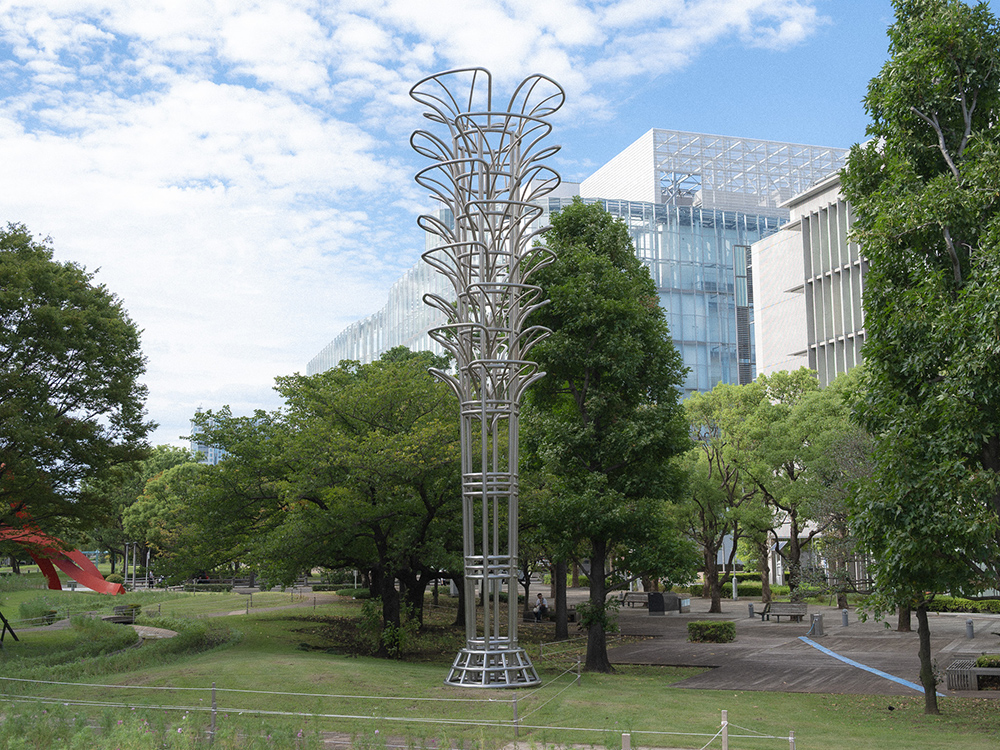
Masafumi Maita’s Flower of the Blue Sky (碧空の花) rises about 13 meters toward the sky. Despite its impressive scale, the way the form opens upward gives it a sense of lightness, resembling either a flower blooming overhead or a vessel catching the wind.
Its silver surface reflects the sunlight, while clouds drift and trees sway beyond. The sculpture itself remains still, but the surrounding view changes with the weather and time of day. Seen together with the changing sky and light, it takes on an expression unique to that particular moment.
What the three works share is that their full impact goes beyond their forms. Your position, the color of the sky, the angle of the light, and the movement of greenery in the wind all change how each appears. Rather than deciding on a single meaning, enjoy how each work looks from where you happen to be. Outdoor art reveals something new each time it interacts with the changing cityscape around it.
Returning to the Hotel With a New Perspective on the City

After visiting all five installations, retrace your route to Hilton Tokyo Odaiba. Places you barely noticed on the way out may look different on your way back. Your eye is naturally drawn to the outlines of buildings, the rhythm of trees along the streets, and the expanse of the sky. Even ordinary objects, such as benches and signs, may begin to reveal the choices of shape and color behind them.
Although the city itself has not changed between the beginning and end of your walk, how you see it has shifted. Stopping at each installation, changing your position, and noticing each artwork’s relationship with its surroundings can bring small details of the city into focus—things that might otherwise have gone unnoticed.
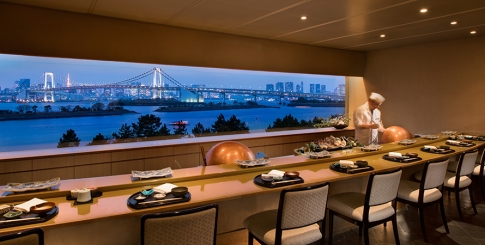
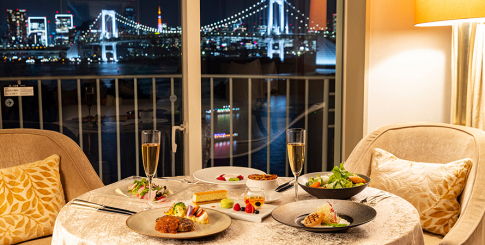
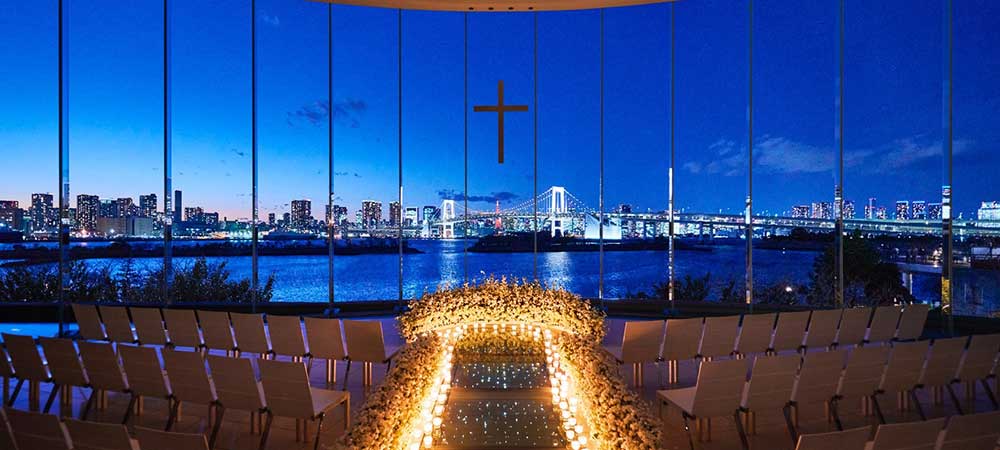
Back at the hotel, take another look around the interiors and out the windows. The sea, the sky, the Rainbow Bridge, and the skyline across the bay may now feel more connected to the city you’ve just explored. With your art walk still fresh in mind, even familiar Odaiba may reveal a slightly different side.
There are aspects of the city you’ll never notice if you only rush from one destination to the next. On a day when the breeze feels just right, step out from the hotel, walk at your own pace, and stop by the artworks that catch your eye. This unhurried exploration is part of the stay experience itself.
Symbol Promenade Park
Daiba, Minato City; Aomi and Ariake, Koto City, Tokyo
Hours: Open 24 hours
Admission: Free


