





Tokyo Stillness
See Tokyo, differently.
Interview 2026.09.04
Taking Tokyo Home, One Book at a Time: Yoshiyuki Morioka on the Joy of Finding Books While Traveling
What do you bring home from a trip to Tokyo? Food, crafts, and photographs all make good souvenirs. However, a book discovered by chance in the city can carry a different kind of memory. Yoshiyuki Morioka runs Morioka Shoten in Ginza, a bookstore built around a single concept: It sells only one book at a time. For a stay at Hilton Tokyo Odaiba, Morioka chose Kumiko Kakehashi’s Writing and Living (Mainichi Shimbun Publishing) as the one book he would bring along. Find a book in a Tokyo bookstore, read it at the hotel, then take it home as a special reminder of your time in Tokyo. What kind of Tokyo journey can begin with a single book?
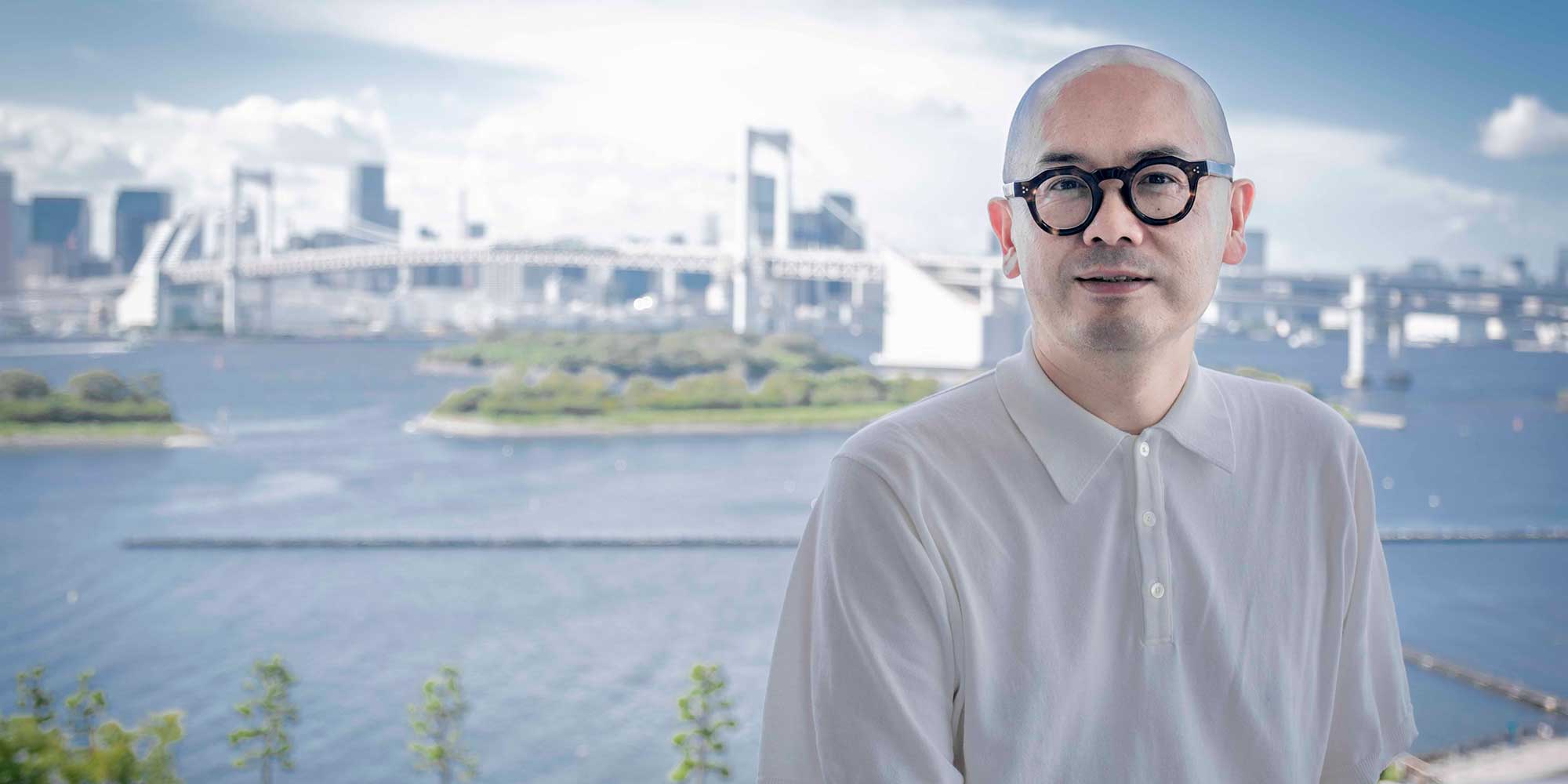
Yoshiyuki Morioka
Yoshiyuki Morioka owns Morioka Shoten. After working at Isseido Booksellers in Kanda-Jimbocho, Morioka ran a bookstore and gallery in Kayabacho. In 2015, he opened Morioka Shoten Ginza, centered on the concept of “a bookstore that sells a single book.” Each featured title can inspire exhibitions, events, and interactions with authors and artists, creating new ways to experience books.
How One Book Can Lead to Unexpected Encounters
At Morioka Shoten, only one title is featured for a set period. The idea came to Morioka when he was managing a bookstore and gallery in Kayabacho, where he observed people gather for new book launches simply because they were interested in one title.
“People were coming just for that one book. Watching that happen, I thought, if this one book is enough to bring them here, maybe we don’t need all the others.”
After opening the shop, publishers, writers, and artists began approaching him with unexpected proposals. These connections introduced him to books—and people—he never would have discovered on his own.
“Early on, I started to feel less like I was making choices and more like I was being chosen. That brought surprises I never could have imagined on my own.”
By narrowing the store selection to one book, Morioka creates room for encounters he could never have planned. That, to him, is the appeal of focusing on a single title.
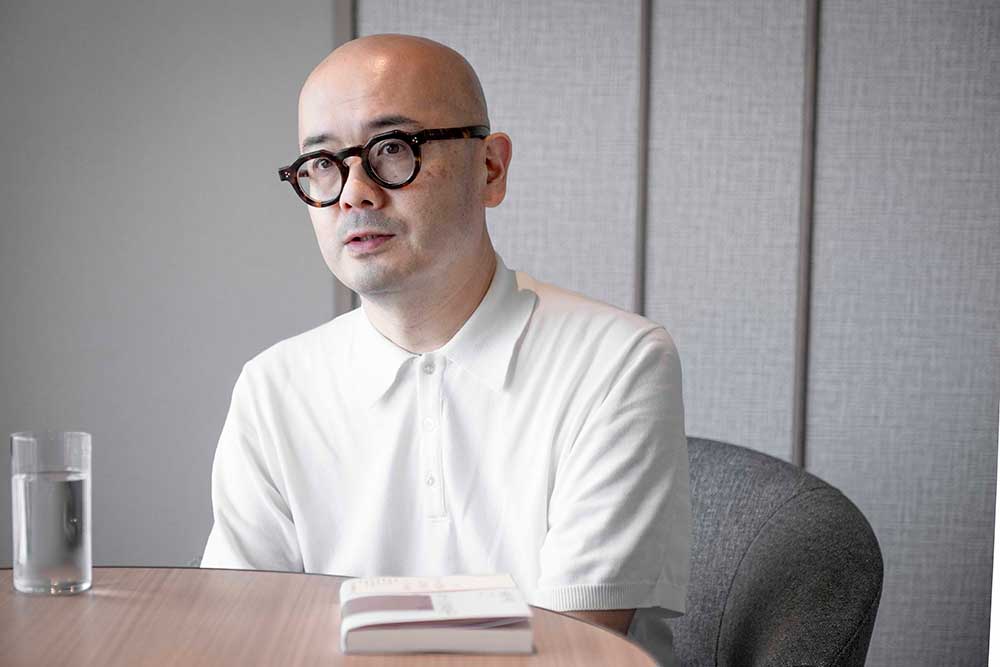
Exploring Tokyo’s Bookstores is a Small Adventure
Morioka follows no fixed rules when choosing books. What matters most to him is the chance discovery that can happen in a bookstore.
“Those spur-of-the-moment discoveries in bookstores are really interesting. That’s one of the best things about a bookstore: You can come across something you never expected.”
He cites Jimbocho as the best example.
“There aren’t many places with this many used bookstores concentrated in one neighborhood. I view Jimbocho as an integral part of Tokyo’s identity, and as a cultural asset the city can proudly share with the world.”
International visitors do not need to be able to read every word of Japanese. They can let their instincts guide them in choosing a book—through photography, cover design, binding, or the texture of the paper. Morioka refers to this process as “book hunting.”
“It can feel like a little adventure.”
Finding a book that feels uniquely yours in a Tokyo bookstore is another way to get to know the city.
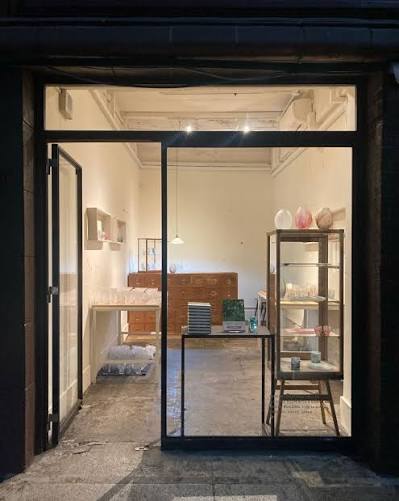
Morioka Shoten in Ginza features a single title for a set period, using that book as an inspiration for exhibitions and events. Browsing Tokyo bookstores and choosing a book by intuition is one way to enjoy the city through what Morioka calls “book hunting.”
Books Purchased While Traveling Carry a Sense of Place
Morioka has experienced this firsthand. Discovering a book on a trip can transform the way a place is perceived and felt.
In a place associated with Lafcadio Hearn, known in Japan as Koizumi Yakumo, seeing a beautiful handwritten manuscript led Morioka to buy a book there. As he learned more about Hearn’s relationship with his wife, Setsu, he began to see stories he had thought of simply as ghost tales in new light: “Maybe they were really love letters to his wife.”
At the Kochi Prefectural Makino Botanical Garden, Morioka saw Suekozasa, a bamboo variety named by botanist Tomitaro Makino after his late wife, Sue. It made him wonder, “Why something as plain as bamboo, rather than a cherry blossom or an orchid?” He bought a book at the gift shop and read it back at his hotel, learning how the couple met and that Sue’s family once owned a confectionery.
“Sweets at the time probably would have used bamboo leaves, which made me wonder if bamboo itself might have somehow symbolized his wife.”
This, of course, is Morioka’s own interpretation. But when something you see on a trip connects with a book, the place takes on another layer of meaning. Where you discovered the book—and what you experienced before reading it—becomes part of the book’s meaning to you.
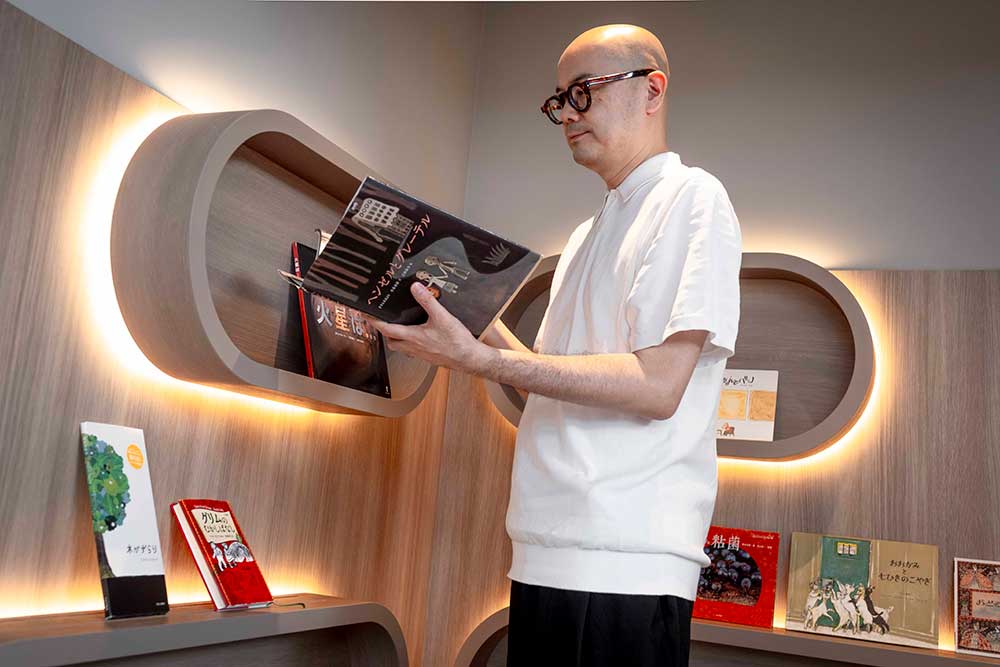
The Book Morioka Chose for Hilton Tokyo Odaiba: Writing and Living
The book Morioka brought as that one title to read at Hilton Tokyo Odaiba was Kumiko Kakehashi’s Writing and Living.
“When I learned I would be staying at the hotel, I started thinking about what I would actually do here.”
What came to mind was time to think—and time to be productive.
“In the past, writers would hole up in hotels or traditional inns to work. I thought it might be nice to do the same here.”
He imagined himself working while finally reading a book that had long been on his list. That was the reason he chose it. The stay, however, unfolded quite differently.
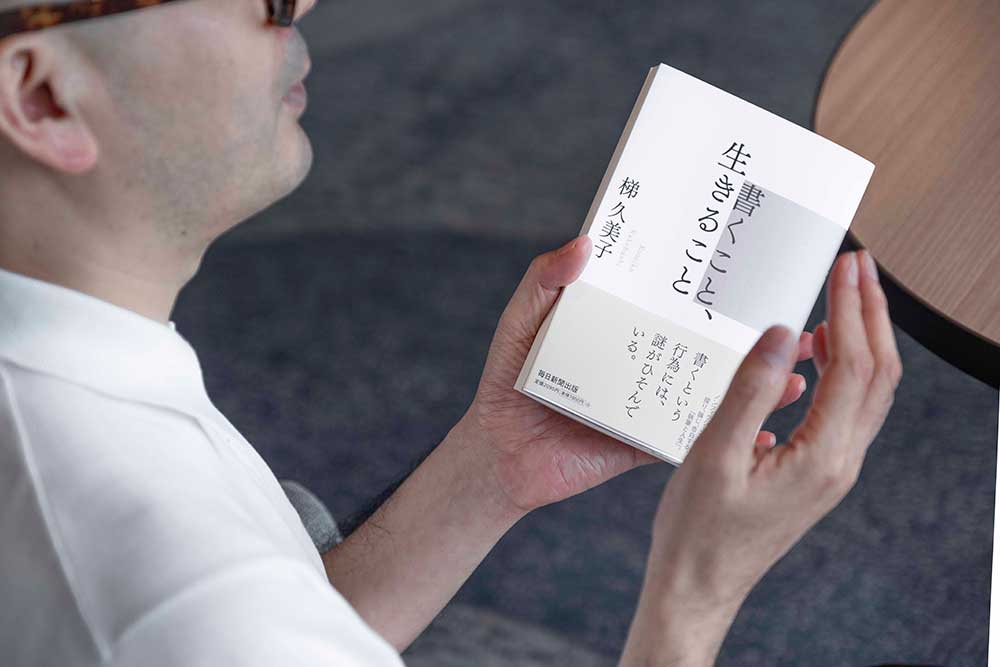
Kumiko Kakehashi’s Writing and Living (Mainichi Shimbun Publishing), the book Morioka chose to read at Hilton Tokyo Odaiba. Rather than picking a book about travel, he started with a more personal question: What would I want to do in this place?
He Planned to Work, Then Read Himself to Sleep
The next morning, when I asked if he had managed to get any work done, Morioka laughed.
“The short answer is: I didn’t work at all,” he said.
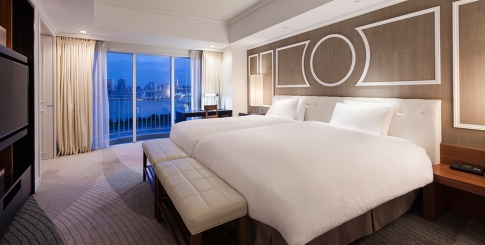
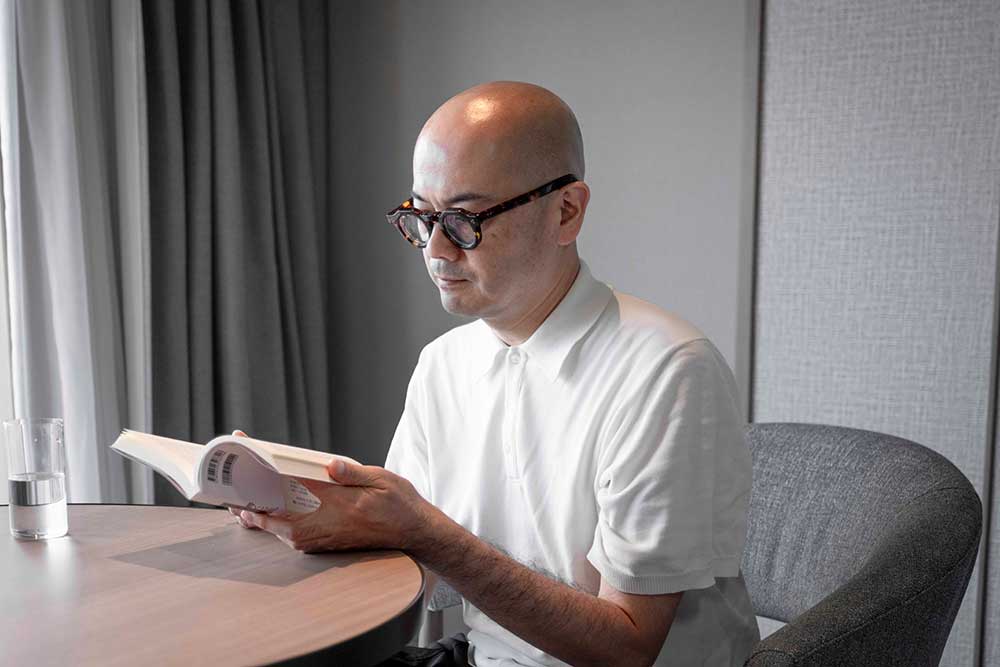
He swam in the pool, stretched out, and read in his room. After dinner, he continued reading in bed until he fell asleep.
“I came in thinking, all right, I’m going to get things done here. But that wasn’t how it went,” he said, laughing. “Still, I had a genuinely good time. I felt refreshed.”
Reading, swimming, eating, and sleeping. Instead of following a strict schedule, he allowed the stay to find its own rhythm. This unstructured time became one of the highlights of his stay at Hilton Tokyo Odaiba.
Seeing Tokyo’s “Ridgeline” from the Balcony
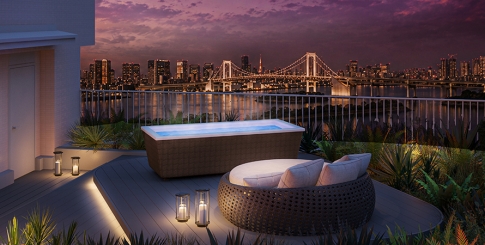
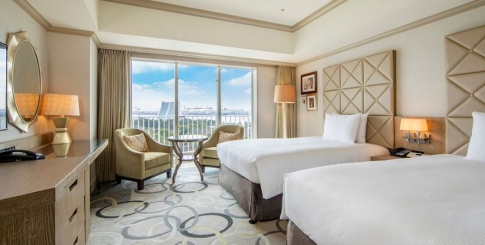
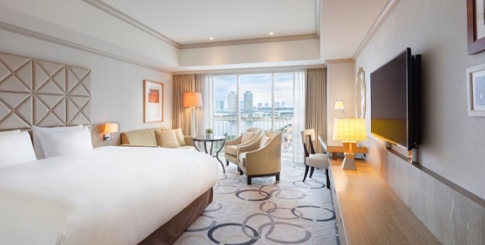
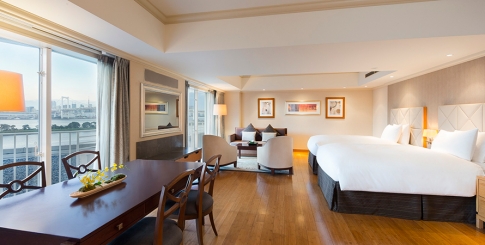
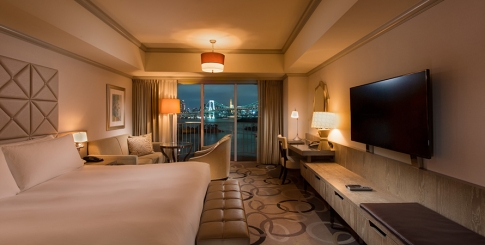
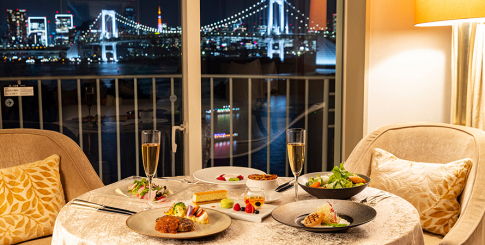
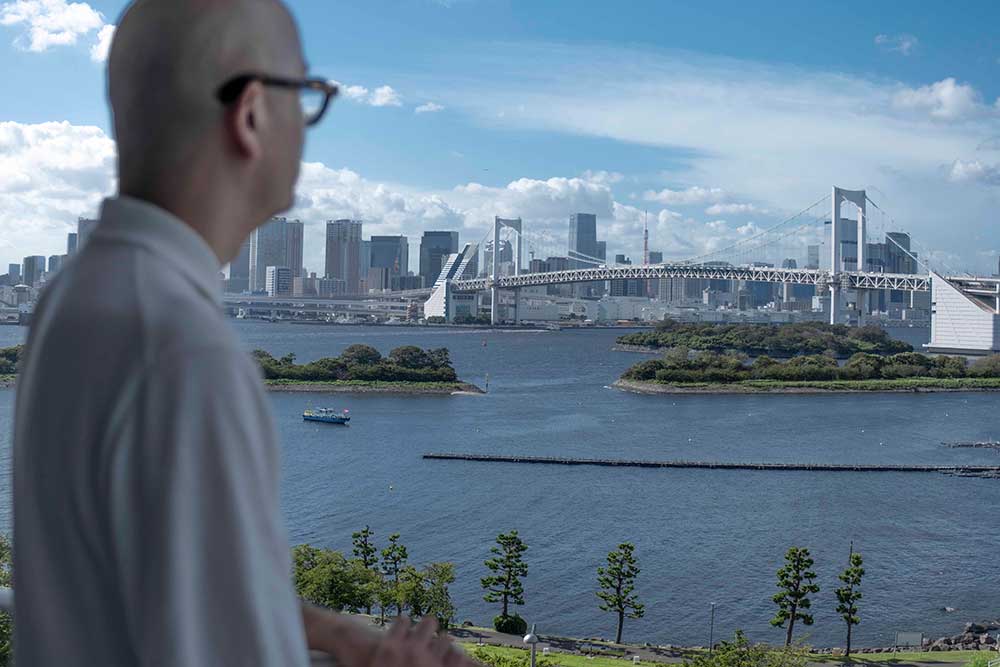
During his stay, Morioka found himself often admiring the view from the guestroom balcony.
“It’s probably less than 30 minutes from here to my workplace. But it feels as if I’m in a completely different Tokyo.”
Rainbow Bridge felt like the switch that made that mental shift possible. The next morning, looking at the high-rises across the water, he described the scene as “the ridgeline of the buildings.”
“A mountain ridgeline can be reassuring just by being there. With the skyline of central Tokyo, I sense something else—power, activity, almost a pulse.”
In the foreground, the water: fish breaking the surface, and gulls in flight. Planes cross the sky, and the city stretches out beyond them. Sea, Tokyo, and sky layer into a single view. With the water between you and the city, Tokyo appears as one continuous landscape. That sense of distance also makes the simple act of opening a book feel different from daily life.
A Book Can Capture the Spirit of Tokyo
At the end of the interview, Morioka shared a story about an international traveler who bought a book at Morioka Shoten. The visitor later posted on social media that discovering and reading the book had become “a wonderful memory of my trip to Tokyo.”
“Tokyo has an incredible bookstore culture. You can walk into a shop, choose something that speaks to you, and take it home. I believe it’s a wonderful way to preserve what a trip felt like.”
Read a few pages at the hotel, then finish the book when you return home. Even years later, picking it up from the shelf may bring back memories of the Tokyo bookstore where you found it, the streets outside, and even the cityscape across the water.
“When something inspires you, you notice something new in yourself. That feeling can shape what comes next. With this in mind, the people we meet and the moments that move us help us create our future.”
Select a book, bring it back to the hotel, and read while looking out over Tokyo. Then take home memories of your trip along with the book. Hilton Tokyo Odaiba offers just the right distance from the city, allowing you to reflect on your experiences and make them uniquely yours.
A book discovered while traveling becomes a souvenir not just of a place but also of the time you spent there. As long as the book remains on your shelf, your journey to Tokyo can continue long after you return home.


