





Tokyo Stillness
See Tokyo, differently.
Interview 2026.10.02
Why Does a Hotel Need Art? Hilton Tokyo Odaiba’s Quiet Journey Through the Sea, Wind, and Light of Tokyo Bay
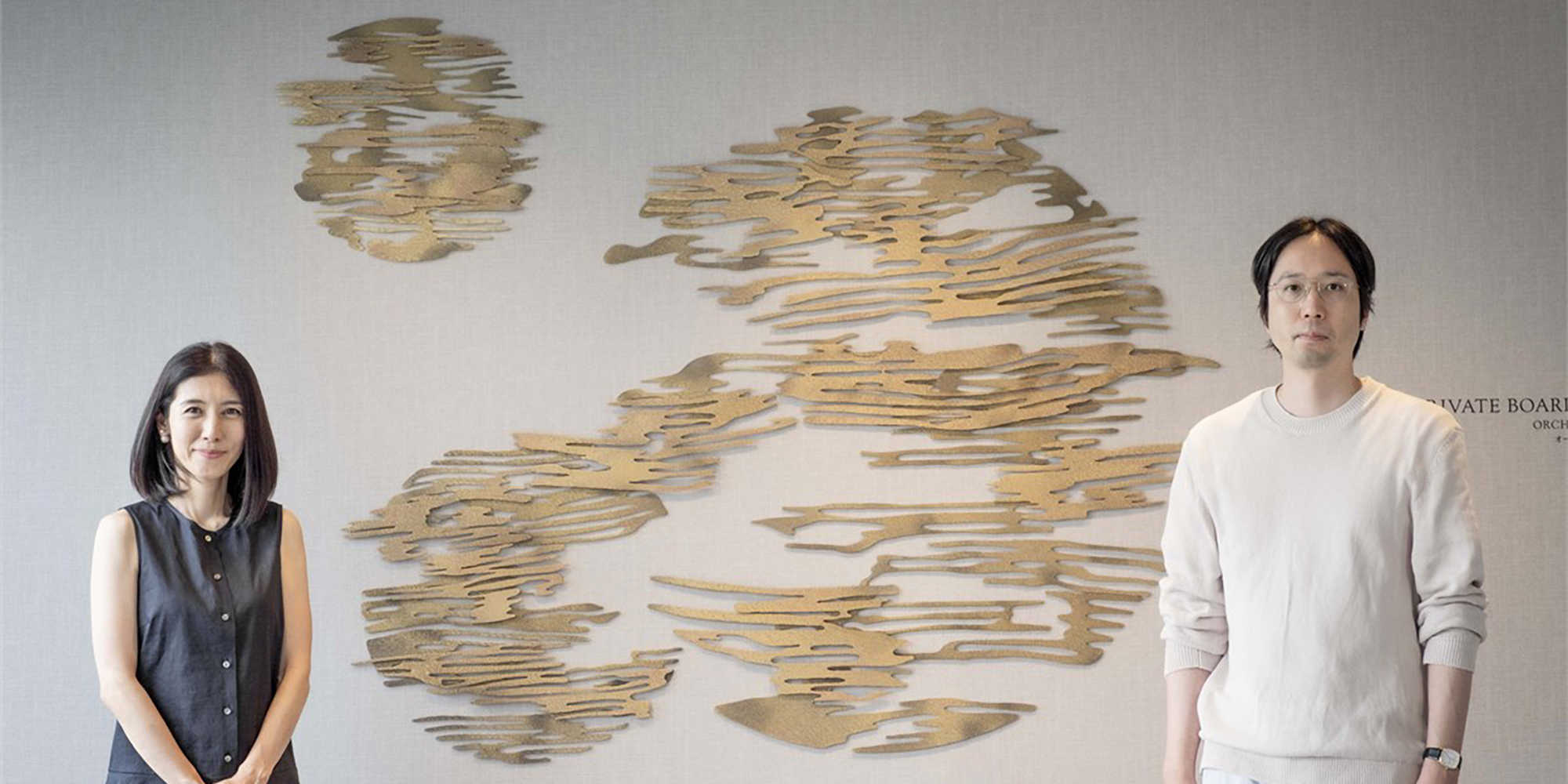
Throughout Hilton Tokyo Odaiba, overlooking Tokyo Bay, artworks inspired by the sea, wind, and light appear quietly throughout the hotel. They do not demand to be studied. Instead, they accompany guests as they move through the space, working in step with the interiors and changing light. We spoke with Kumi Takagi, who led the art direction for the hotel’s renovation, and metal artist Kazune Miyakawa, who created works for five public areas, about why art belongs in a hotel and how these pieces came together.
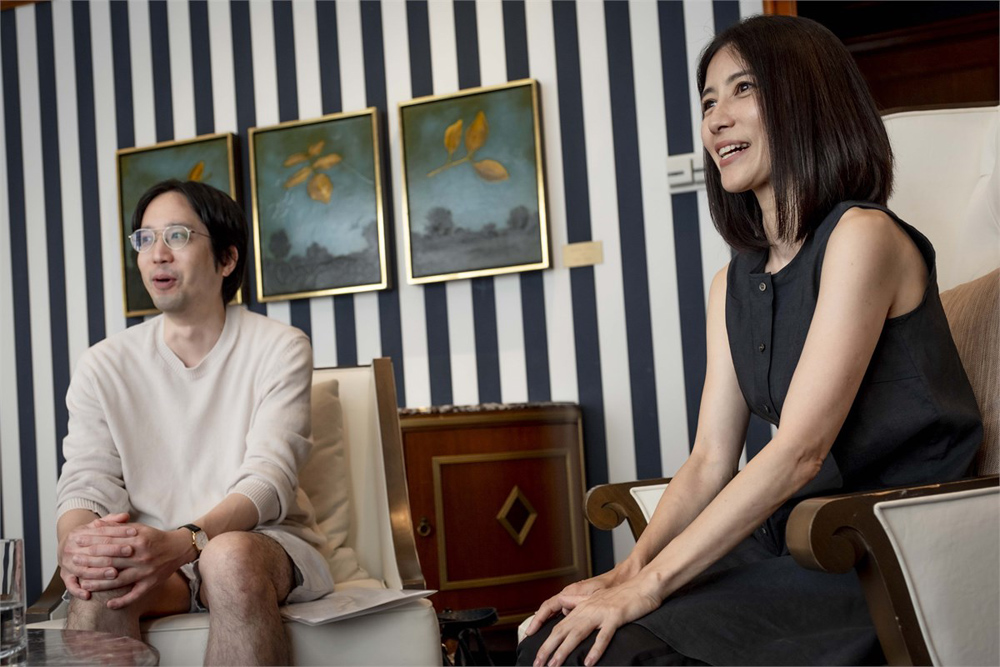
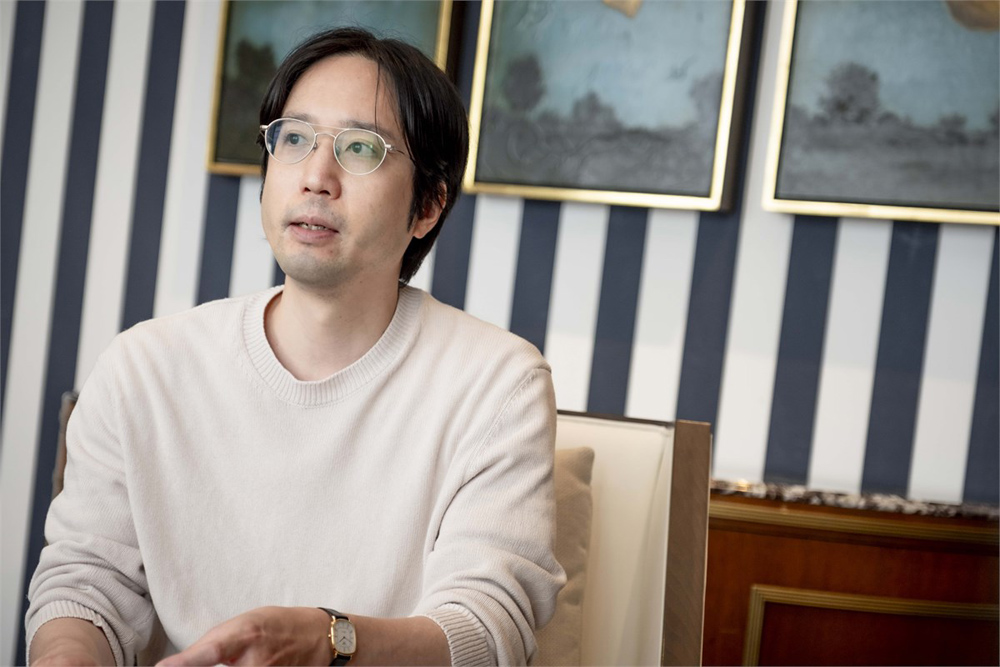
(Left) Kazune Miyakawa
Metal Artist
Born in Funabashi, Chiba. After graduating from the Metal Hammering program in the Crafts Department at Tokyo University of the Arts, Miyakawa completed his graduate studies at the same university. Working primarily in metal, he moves freely across disciplines, creating craft objects, jewelry, furniture, architectural hardware, and more. His work takes into account not only the character of the material, but also fabrication methods, structural requirements, and installation conditions. For Hilton Tokyo Odaiba, he created metal works for five public areas.
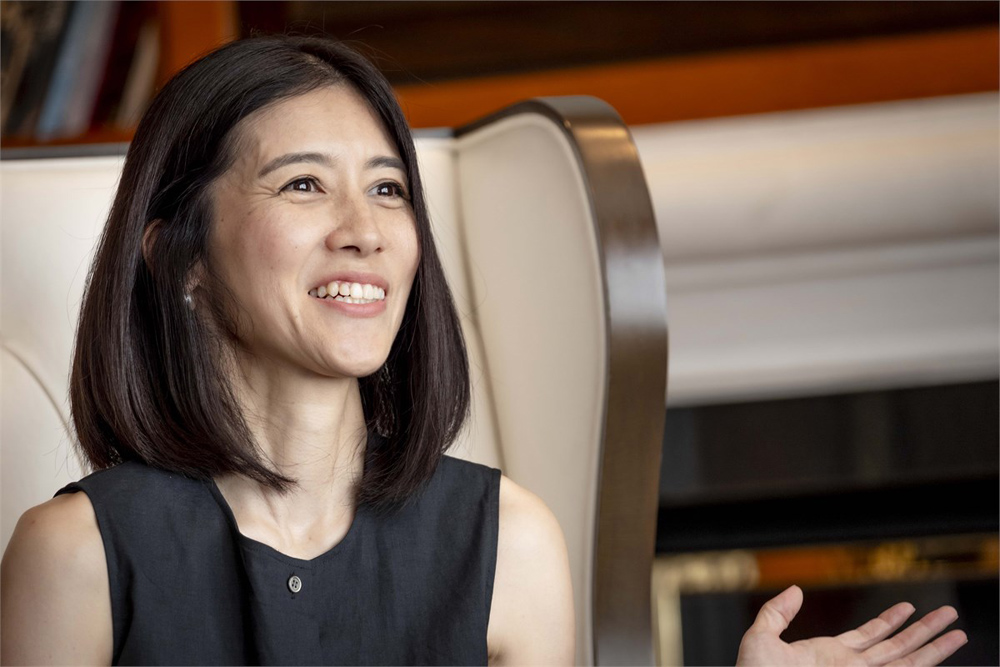
(Right) Kumi Takagi
President, Sakutojutsu Inc. / Creative Decorator
Takagi works on art programs for hotels, commercial spaces, and other environments. She develops art plans, selects artists, and directs production by interpreting each space’s concept, local context, and brand perspective. For Hilton Tokyo Odaiba, she was responsible for the art direction of the hotel’s public areas.
As you walk through the hotel, the art enters your field of view without asking you to stop and contemplate it. There are metal forms that recall the surface of water, rings casting shadows across a wall, and flowing lines that suggest wind moving through a corridor.
Why did this hotel need these works? We began by asking Takagi about the idea that set the project in motion.
“The starting point was the idea of a quiet elegance where the sea and the city meet. We wanted refinement without showiness, and we wanted to leave room for guests to bring their own memories and emotions into the experience,” Takagi says.
That meant the works were never intended to assert themselves as standalone objects. Instead, they would blend naturally into the surroundings and make the time guests spend at the hotel feel a little richer.
“I wanted the art to be present, but also to feel like part of the space—almost like a subtle element that makes being there just a little more comfortable,” Takagi says.
There Was No Need to Recreate Tokyo Bay Outside the Window
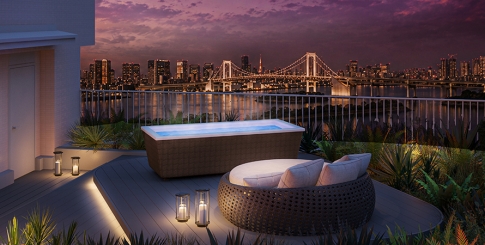
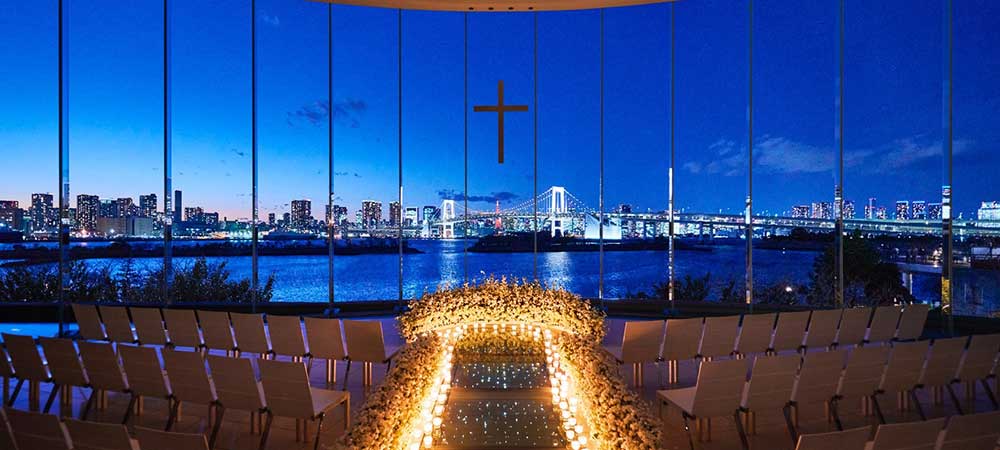
One of Hilton Tokyo Odaiba’s greatest assets is, of course, its view of Tokyo Bay.
With Rainbow Bridge and the city skyline beyond it, the water changes character from morning to afternoon, evening, and night.
For that very reason, Takagi says she never considered reproducing Tokyo Bay itself in the artwork.
“The real Tokyo Bay is right in front of you. Rather than turn that view into another picture or sculpture, I wanted to express what lies behind it,” Takagi says.
Wind.
The movement of the water.
Reflected light.
The passage of time.
“They have no fixed shape and you can’t touch them, but you can clearly feel them. I think one thing art can do is give visible form to things like that,” Takagi says.
From there came the theme that runs through the entire group of works: the sea, wind, and light of Tokyo Bay.
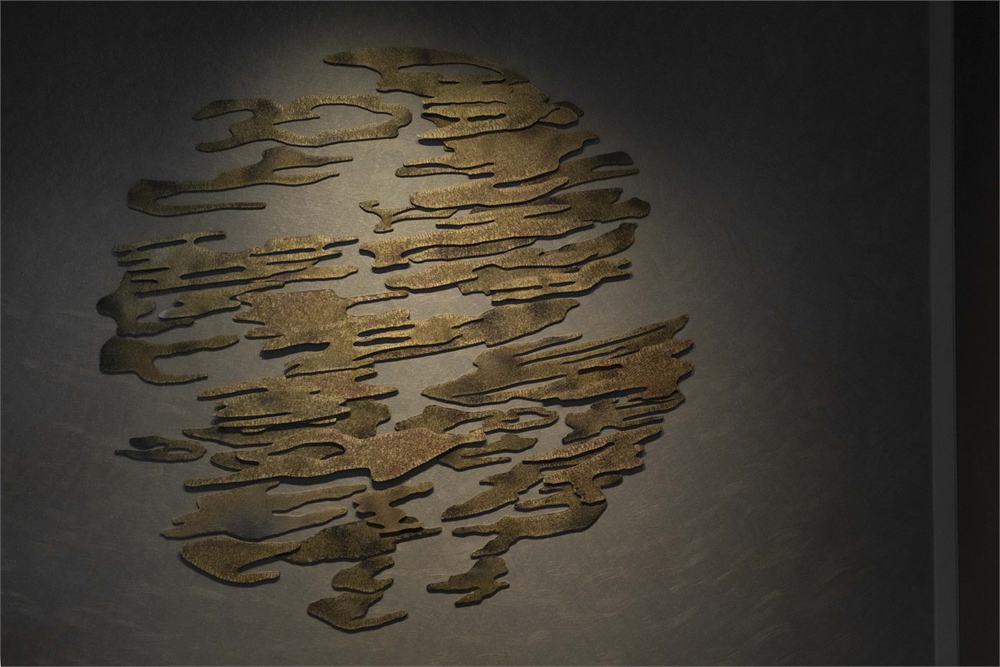
Moon Fragment. This work evokes moonlight trembling across the waves and dissolving into the water. Soft illumination is used to deepen the sense of calm associated with Tokyo Bay at night.
The Artist’s Own Memories of Tokyo Bay
One reason Takagi chose Miyakawa was the range of his technical abilities.
“Miyakawa has an extraordinary number of techniques at his disposal. You give him one idea and it feels as though ten possibilities come back. We needed five works to share one visual language while also responding to five very different installation conditions. There aren’t many artists who could handle all of that on their own,” Takagi says.
Miyakawa also happened to have grown up close to Tokyo Bay.
“I was born in Funabashi, Chiba. My grandfather had a dyeing workshop along the Ebi River, which runs through the center of the city, and the sea was close by. Tokyo Bay was always part of my surroundings,” Miyakawa says.
The Tokyo Bay Miyakawa remembers was not simply a beautiful landscape.
“On a clear day, there’s a fresh breeze and bright light. But when it rains, the air turns damp and you can smell the salt. At night, the water can become almost black, as if it might swallow you up. It isn’t only beautiful; there’s something mysterious and even a little frightening about it. To me, Tokyo Bay has all of those different moods,” Miyakawa says.
Tokyo Bay was the hotel’s theme and also part of the artist’s own formative landscape.
The two came together naturally in the work.
Making Metal Feel Like Something Other Than Metal
The works in this project are made primarily from metal.
At first glance, that may seem like the opposite of the soft, shifting qualities of sea, wind, and light.
“Metal has strength, so you can push it very thin, very fine, and very delicate. At the same time, it can still feel cold and inorganic. For this project, I wanted to remove as much of that sense of ‘metal’ as possible,” Miyakawa says.
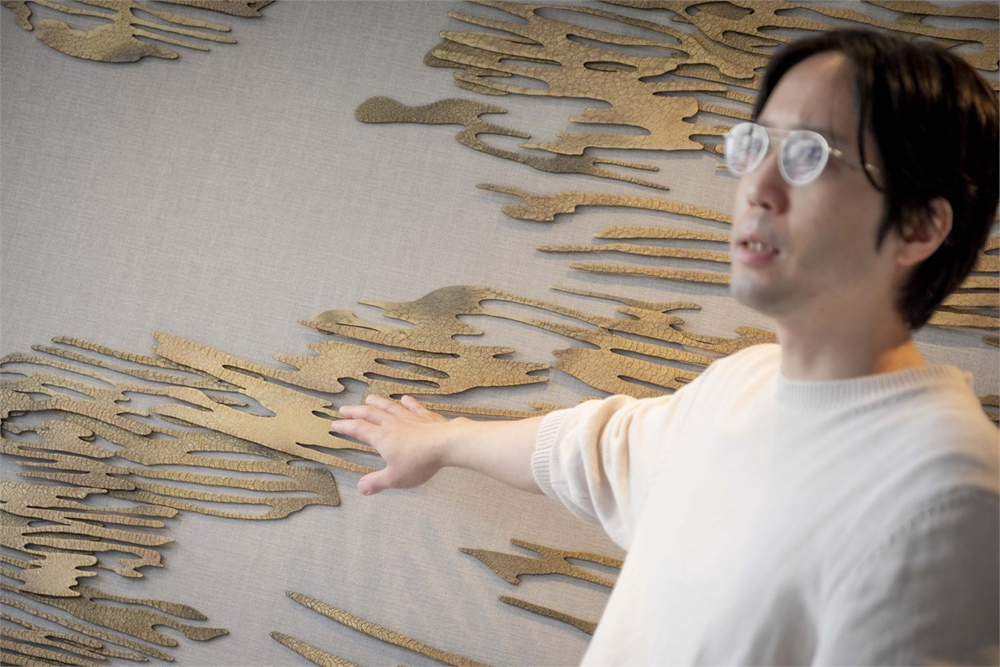
Surface Echo. Layers of metal capture the ripples and reflections of light that spread across the water. Depth and shadow shift as the viewer changes position, creating the impression of a calm surface that is always in motion.
What Miyakawa was aiming for, in his own words, was “a mysterious material.”
He cut the metal into organic lines and, rather than correcting every distortion created during fabrication, sometimes left those irregularities as part of the material’s own movement. The finish became the area that required the most experimentation.
“A professional painter is usually trying to eliminate unevenness and produce a perfectly consistent finish. This time, I asked for the opposite: ‘Please make it more uneven,’” Miyakawa says.
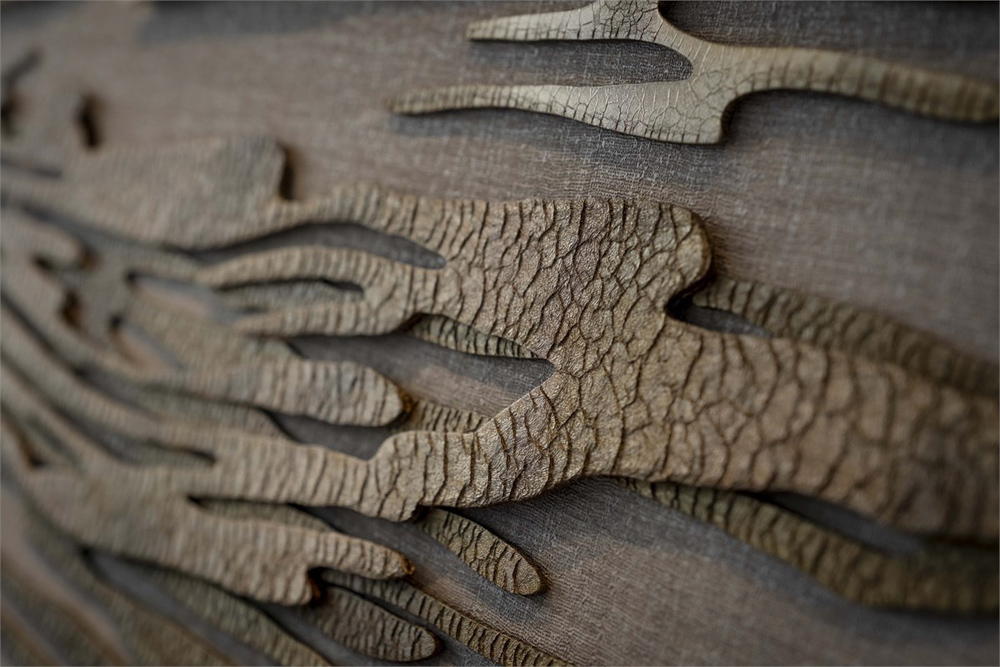
Seen up close, the surface reveals a complexity far removed from a uniform sheet of metal. Wrinkled coatings and deliberately uneven layers of paint helped move the work toward what Miyakawa describes as “metal that doesn’t quite feel like metal”—a material that resists easy definition.
They shrank and textured the coating, layered multiple colors, and applied metallic finishes. Sample after sample, they worked to strip away the coldness normally associated with metal.
The finish, which would ultimately determine the character of the work, became one of the areas where Takagi and Miyakawa experimented most intensively.
“We looked at the actual samples and kept saying things like, ‘This is too thick,’ ‘This feels a little heavy,’ or ‘I’d like the color to move a little more in this direction.’ At one point Miyakawa used the word ‘camouflage,’ and suddenly it clicked for me too,” Takagi says.
Rather than trying to imagine the finished work through words alone, they made something first.
Make it, then look.
If it feels wrong, take something away.
Then think again.
That cycle defined the way the two worked together.
Hotel Art Doesn’t Have to Stop You in Your Tracks
As you move through the hotel and encounter the works in place, each one takes on a different character depending on its setting.
One casts different shadows depending on where you stand.
Another catches the light and begins to resemble ripples on water.
Another runs along a corridor in a flowing arrangement that suggests wind.
Standing in front of that piece, Takagi offered a telling observation.
“This one isn’t meant to make people stop,” she says.
In a museum, you stand in front of a work, look at it, and think.
A hotel corridor works differently: people are always moving through it.
“Guests are on their way somewhere—to their room, to a restaurant, wherever it may be. I thought the art could move with them, almost like wind,” Takagi says.
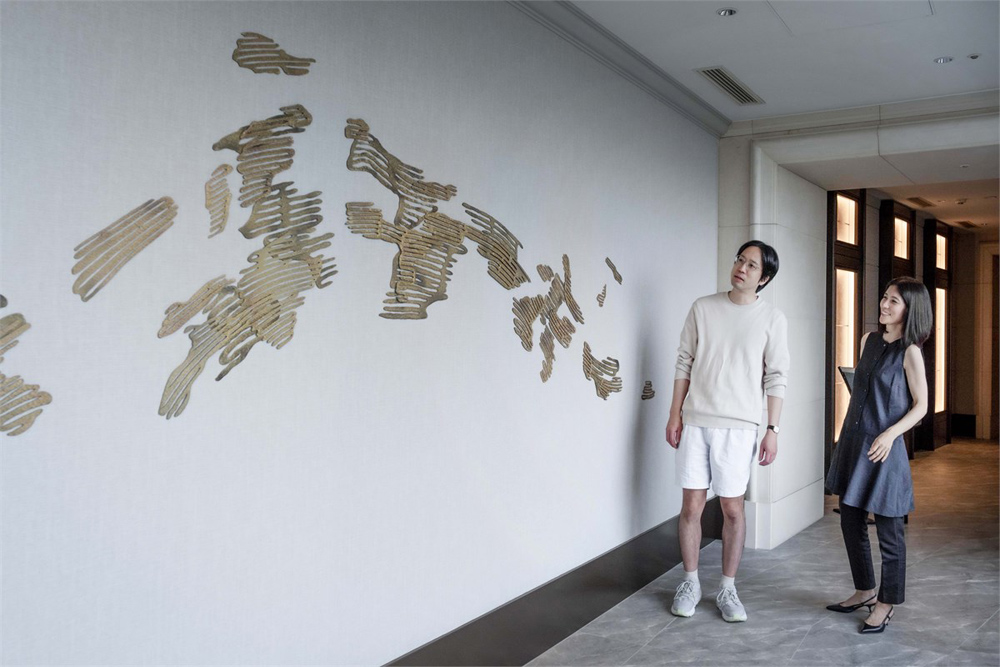
Sea Breeze Trace. Abstract forms trace the path of an invisible breeze off the water. The work changes depending on the viewer’s pace and position, creating the sense that the wind is moving alongside guests as they make their way through the hotel.
You walk.
Something catches your eye.
The light changes.
Your angle changes.
Then you keep walking.
“Instead of the viewer going to the artwork, the artwork appears somewhere along the guest’s journey. That was the image I had in mind,” Takagi says.
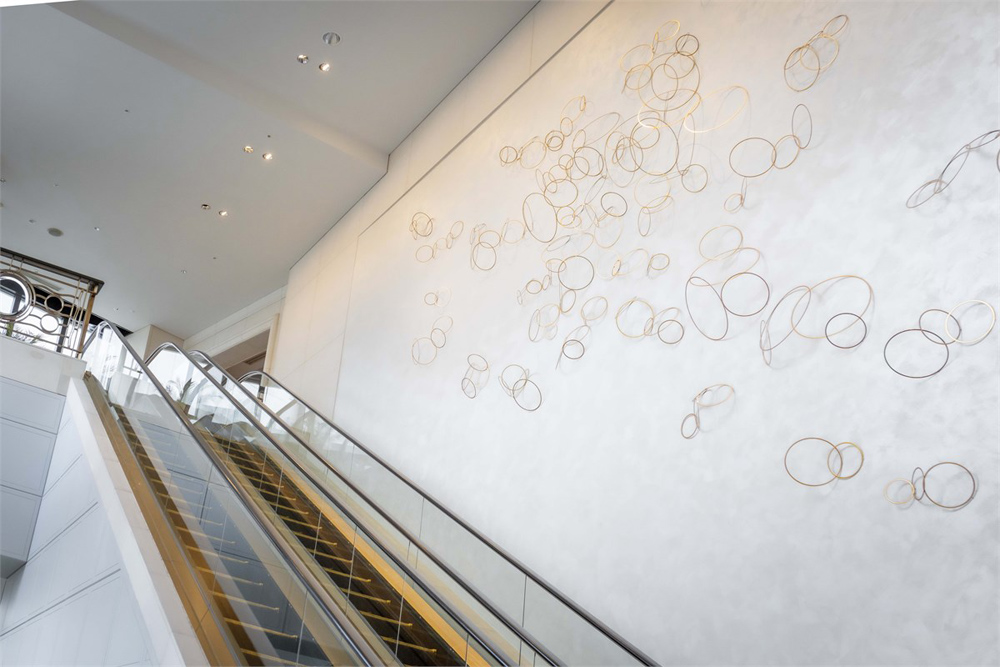
Breathing Rings. This work captures the moment when ripples across Tokyo Bay meet the lights of the city. Its shadows shift with the light and with the viewer’s position, allowing the piece to change gradually over the course of the day.
That idea runs through all five works.
More important than presenting the artworks as objects in themselves was creating a gentle continuity of sea, wind, and light as guests move from the lobby through the hotel and eventually to their rooms.
“We wanted the time spent moving through the hotel to become its own journey toward quiet, with the art appearing naturally along the way,” Takagi says.
Sometimes Quiet Comes from Taking Things Away
Some of the works originally contained more elements than they do now.
Over time, Takagi and Miyakawa began removing them.
“There was much more in the beginning. But we kept taking things away because the work needed room to breathe,” Takagi says.
Filling an entire wall would increase the amount of visual information in the work. It would also create more tension for the person looking at it.
So the question was not only what to include, but what to leave out.
Which elements should remain?
Where should there be open space?
Those decisions, layered one on another, are what create a sense of quiet within the hotel.
At the end of the interview, Takagi described the role of the art this way.
“The art doesn’t exist on its own. There’s the interior, the light, the space, and the time people spend there. I like the idea of the work existing in rhythm with all of those things,” Takagi says.
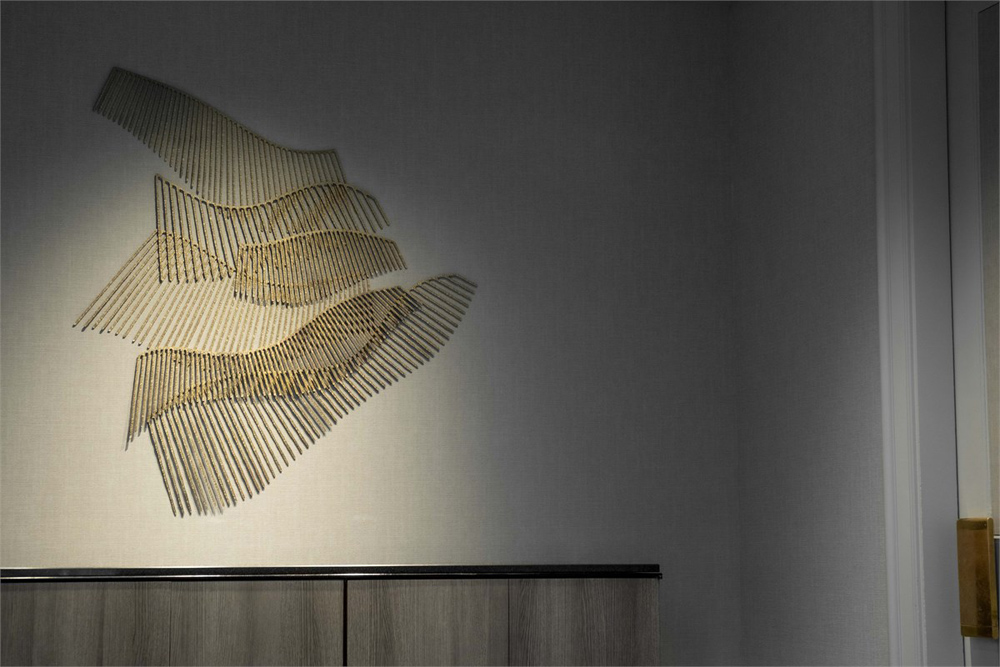
Elegant Current. Delicate overlapping lines give visible form to an invisible sea breeze. As the viewing angle changes, the lines overlap differently, creating a sense of depth that makes the wind seem to pass through the space.
If you visit Hilton Tokyo Odaiba, you do not need to seek out all five works.
You do not need to remember their titles or understand what they mean.
One may simply catch your attention as you walk by.
You may notice how beautiful the light looks.
You may pause for a moment at a shadow cast across the wall.
That is enough.
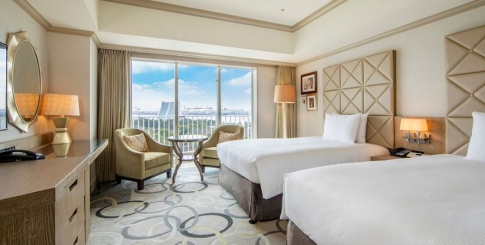
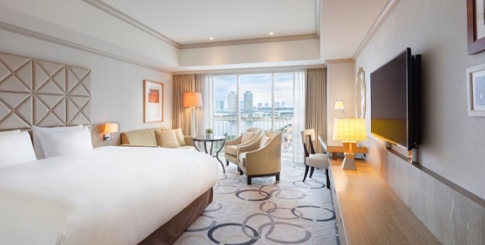
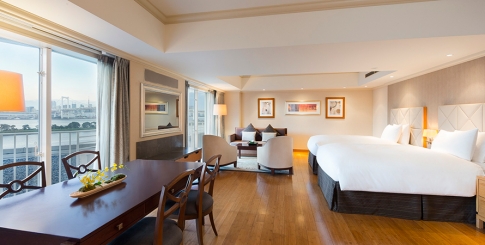
Then you reach your room and look out at Tokyo Bay again.
The forms you noticed inside the hotel may connect in your memory with the movement of the water and the invisible wind passing over it.
You have moved from the intensity of Tokyo to the quiet of the waterfront.
The art at Hilton Tokyo Odaiba quietly supports that shift in feeling without calling attention to itself.
This is not a journey taken for the sake of seeing art. It is a journey that art makes you see a little differently.
That, perhaps, is the kind of journey toward stillness this hotel is trying to create.


