







Tokyo Stillness
See Tokyo, differently.
Interview 2026.06.05
Tokyo Comes into Focus When You Step Back:. Katsuya Kubokawa on Why He Chooses Hotels for the Perspective They Offer
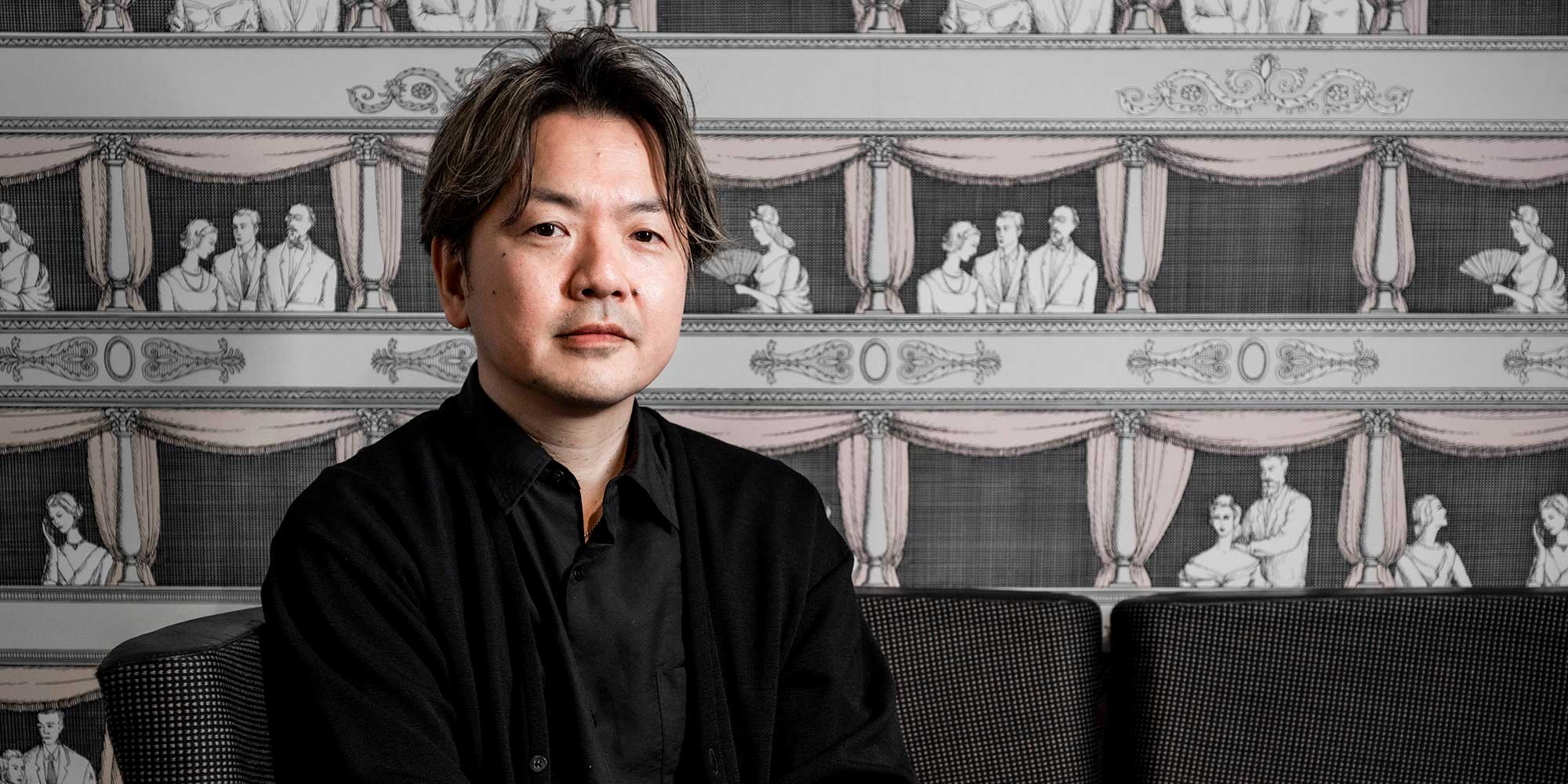
What draws people to a particular hotel? In this series, professionals from diverse fields share the hotels they intentionally seek out in the cities they visit—and why. This time, we spoke with interior stylist Katsuya Kubokawa. For a spatial stylist, what matters most in a hotel is neither luxury nor price. Instead, it is about the right distance from the city and taking a break from everyday life. More than anything, a hotel also determines your vantage point. Rather than immersing yourself in the heart of Tokyo, viewing it from slightly removed Odaiba offers an entirely new perspective on a familiar city.
Viewing Manhattan from the Outside Brings the City into Focus
“When I go to New York, I sometimes choose to stay not in Manhattan, but across the river in Brooklyn.” Kubokawa highlights Wythe Hotel in Brooklyn as a perfect example. A former factory converted into a hotel, it is known for its high ceilings, expansive windows, and interior design that blends retro and modern elements. Yet, that is not the only reason he is drawn to it.
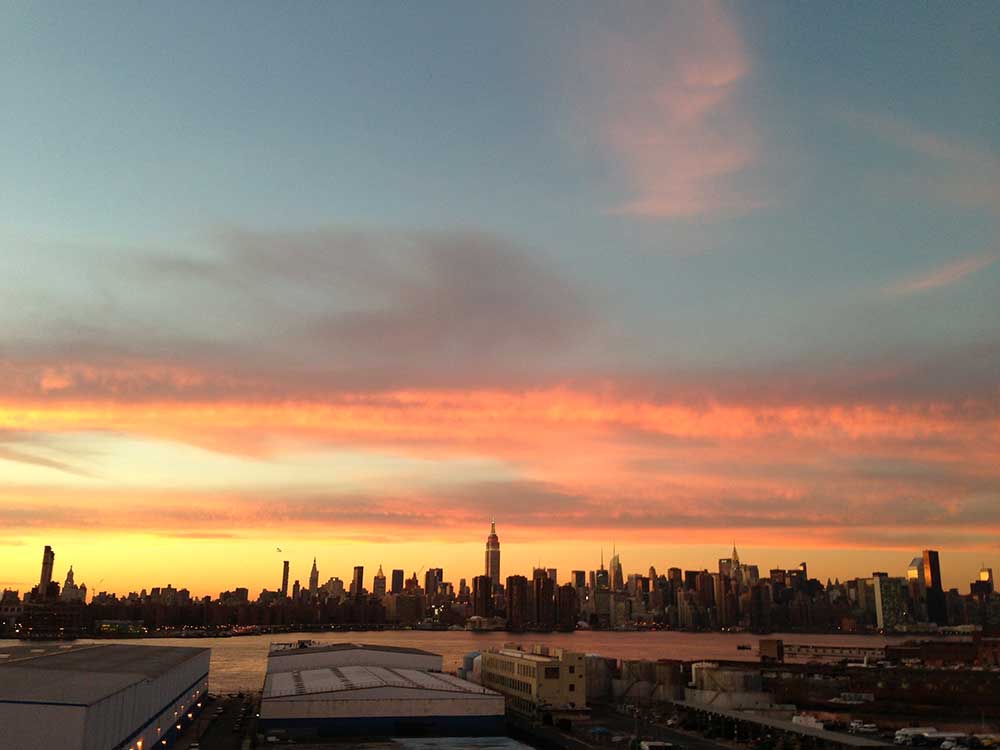
“When you’re right in the middle of Manhattan, you actually can’t really see the city as a whole. But the view from the rooftop bar here is incredible.”
Being in the middle of a skyline can make it harder, not easier, to feel its scale. Your field of vision is narrowed, and the city presents itself only in fragments. But from across the river, the entire cityscape suddenly comes into focus. The soaring towers beyond the Hudson. The light that shifts over time. There are moments when the city appears not as a collection of buildings, but as a unified landscape.
Kubokawa is not just looking at architecture or beautiful interiors. He values how a hotel frames a city. Where do you place yourself to truly see what a city looks like? For him, a hotel is also a point of view. That same idea applies to Odaiba’s place in Tokyo. It is close to the center, but not part of it, allowing you to take in Tokyo from a little distance.
A Hotel Can Become Your Vantage Point on the City
“If all you see is Shinjuku, Shibuya, or Ginza, you’re not really seeing Tokyo.”
While the city center may be the city’s face, it does not provide the full picture. Kubokawa believes there are things you can only begin to understand once you step back a little.
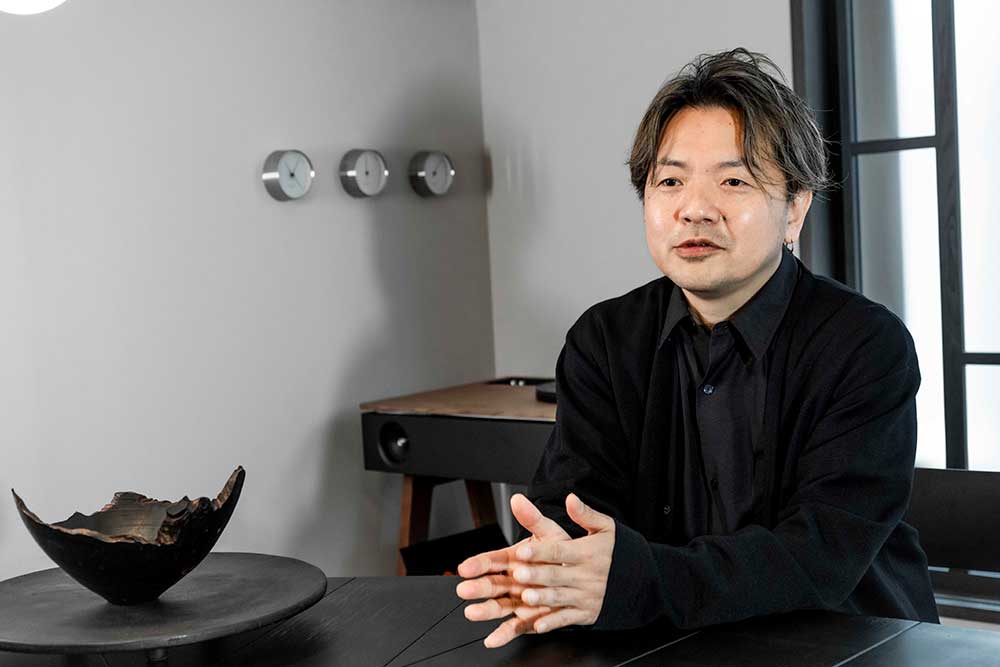
“It’s on the journey from a place a little further out into the center that you start to notice how people live, and the nuances between cultures. That’s when you begin to understand a city.”
Paris works the same way. Step just a little outside the center, and the atmosphere changes. You find immigrant communities, different rhythms of life, and a depth you would never encounter if you only stayed on the polished paths designed for tourists.
“The places where you can actually experience how people live are far more interesting. A hotel isn’t just somewhere to sleep. It also determines the perspective from which you see a city.”
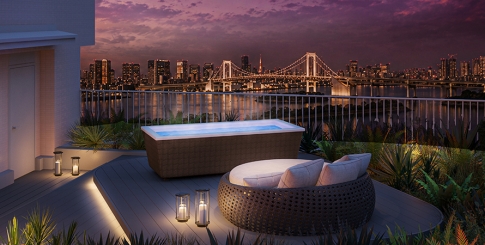
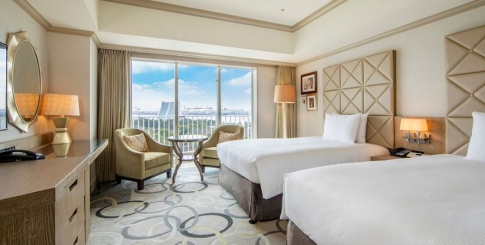
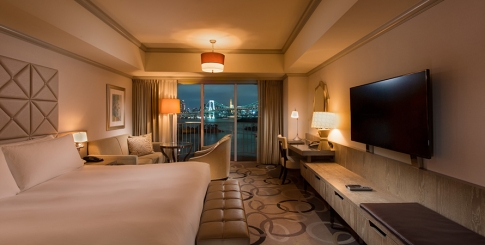
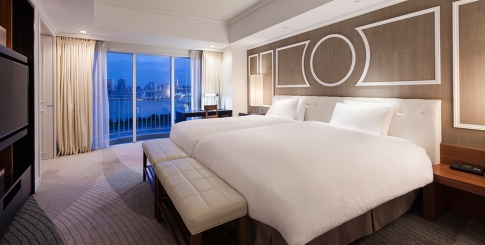
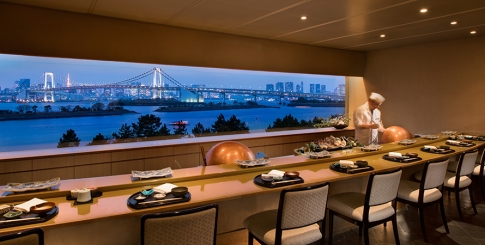
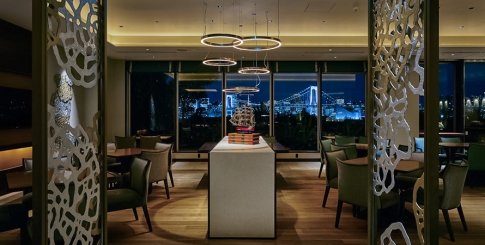
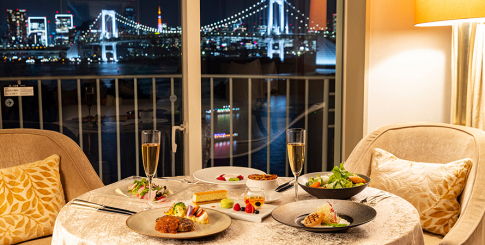
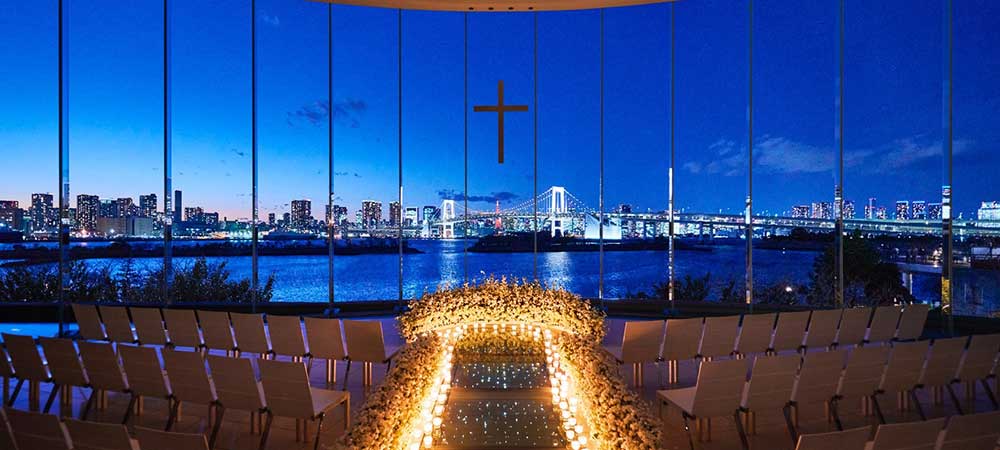
Tokyo is no different. With its business districts, old downtown neighborhoods, waterfronts, cultural hubs, and quiet streets lined with shrines and temples, each area feels like an entirely different city. The quality of a trip greatly depends on where you view Tokyo from. The Tokyo you see from the balcony of Hilton Tokyo Odaiba is not Tokyo from the thick of it. Viewed across the sea and sky, the city’s density, light, and sense of distance all come together as a single scene.
What Feels Extraordinary Comes Not from Distance, but from a Shift in Perspective
“You don’t have to go far. What matters is whether everyday life actually switches off.”
For Kubokawa, experiencing something extraordinary is not a matter of physical distance; it’s about a mental reset. A hotel becomes valuable when it can create that kind of psychological separation.
“It’s close enough that you could go right back anytime, but far enough that you can feel detached. That balance is what makes it work.”
A perfect example is the St. Pancras Renaissance Hotel in London.
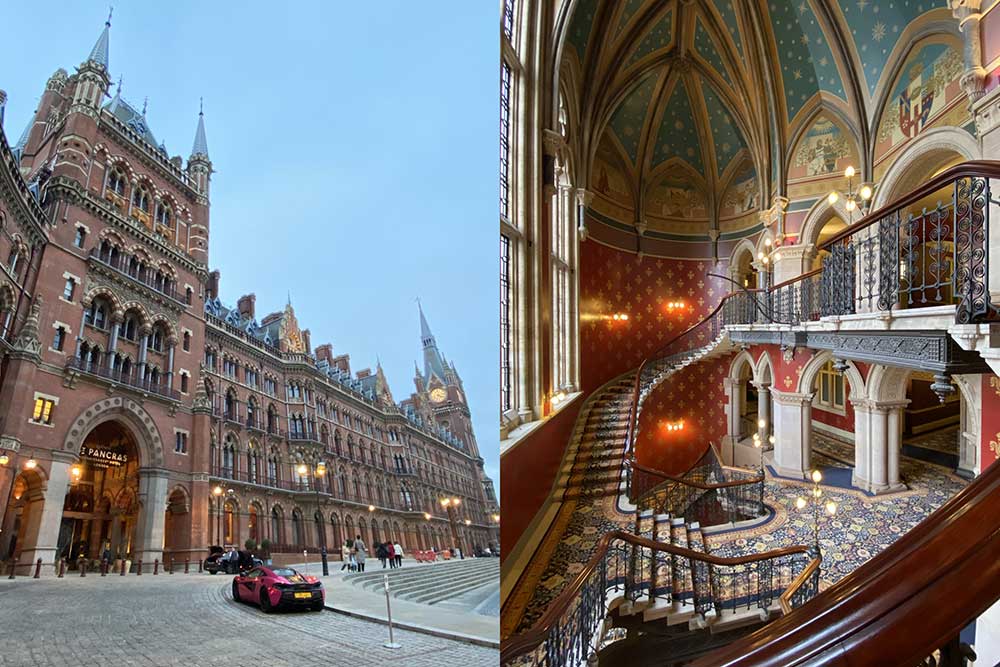
“The scale of the 19th-century Gothic architecture is overwhelming. It feels as if you’ve stepped into another world. And yet, right next door is the Eurostar station, so you can head straight to Paris or Belgium. That duality—being part of everyday urban life, while also feeling like a completely different world the moment you step in—is exactly what makes a city hotel so compelling.”
What Kubokawa describes is more than just the charm of historic architecture; it is about the coexistence of urban function and a sense of escape.
This is not exclusive to cities overseas. Tokyo also has areas set apart from the center that offer a new angle to the city.
There are places where you are not swept up in the city’s momentum but can step back far enough to see its outline and understand its story more clearly. From that perspective, Odaiba is one answer for Tokyo. It is nearby, but properly apart. And that distance changes the way you look at the city.
A Hotel is Not Just a Place to Stay—It Becomes an Instrument for Experiencing the City
Whenever Kubokawa has extra time during a business trip or stay, he sets aside at least one day dedicated to simply enjoying the hotel. One of his favorite places for that is the TWA Hotel in New York, the renovated former terminal of JFK Airport.
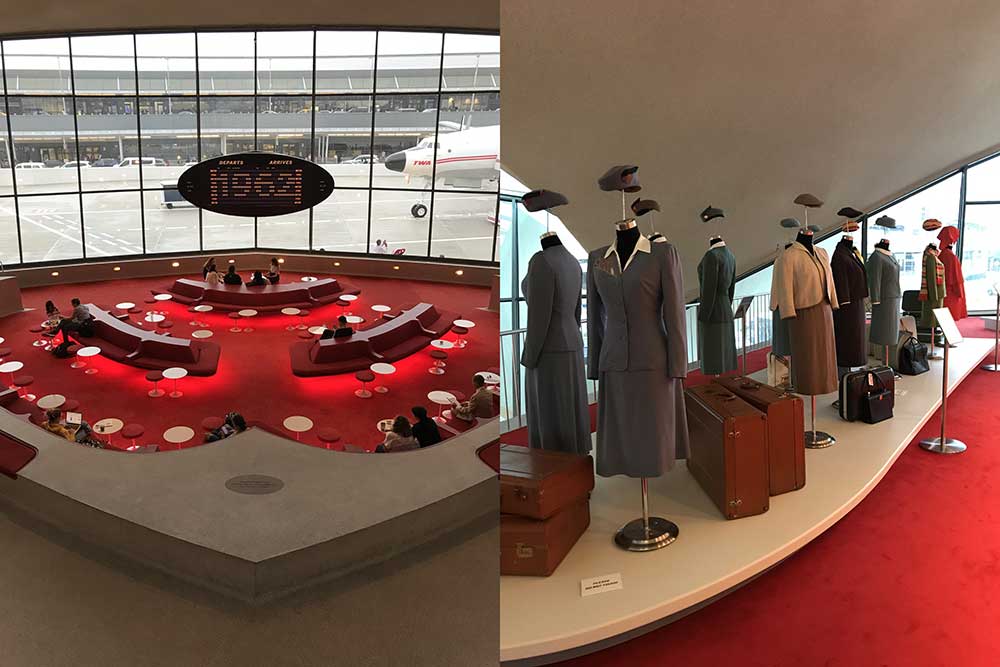
“It is located in the original Trans World Airlines terminal, creating a retro-futuristic atmosphere that is incredibly exciting. There are displays of historic uniforms and posters from the era. From the rooftop pool and even from the rooms, you can watch planes taking off and landing nonstop. Before you know it, you have spent two full days there without stepping outside once. The hotel itself is a fully realized experience.”
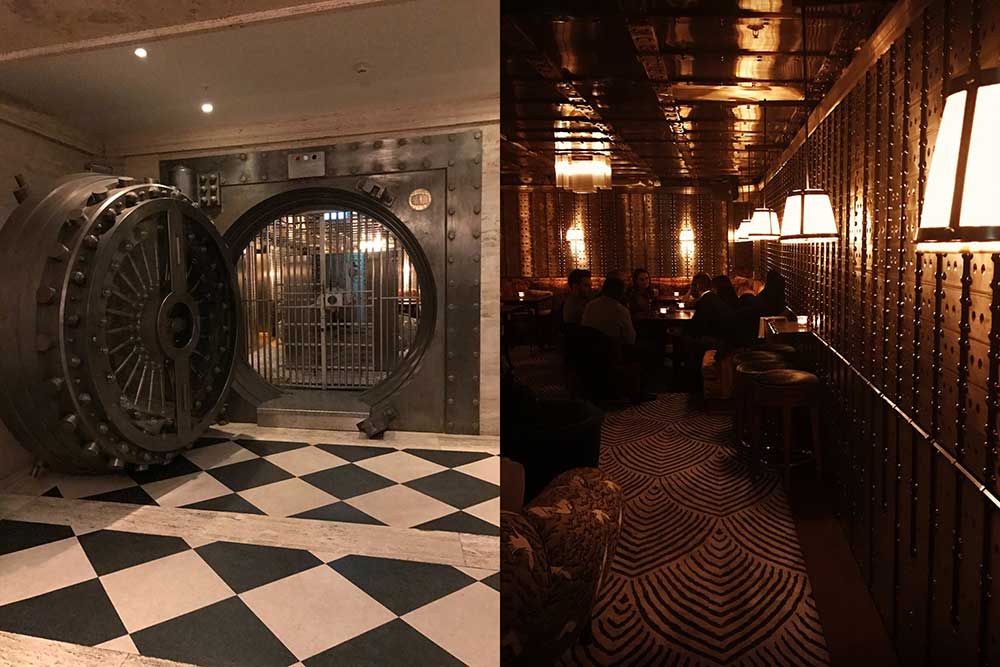
He says the same is true of The Ned in London.
“It’s the former Midland Bank and HSBC headquarters, and the massive old vault downstairs has been turned into a bar. Even though it’s in the middle of the financial district, the interior feels so complete in itself that it's almost like a theme park. Hotels with that kind of immersive environment—where you don’t even need to leave the building—are always interesting.”
A hotel can serve as a base for exploring the city, but it can also become the center of the stay itself. Its value lies not only in providing a launchpad but also as a space where you can settle in, experience time differently, and feel a shift in your mood and mindset.
Seen that way, Hilton Tokyo Odaiba exemplifies a place in Tokyo where time spent doing nothing can actually hold meaning, with the sea and sky as your backdrop.
You look out at the city, catch your breath, and only then decide which version of Tokyo you want to experience. Places that allow for this kind of pause may exist not in the middle of the tourist core, but slightly apart from it. Time spent at the hotel becomes a breathing room for seeing Tokyo anew. That is part of the unique value Hilton Tokyo Odaiba offers.
Hilton Tokyo Odaiba Offers a New Vantage Point to Tokyo
“A hotel is also a place where you reassess the way you live.”
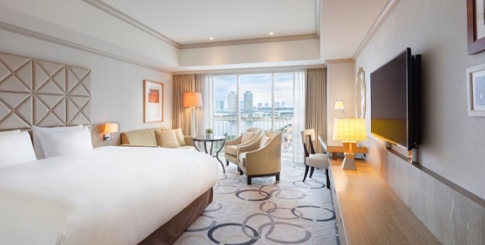
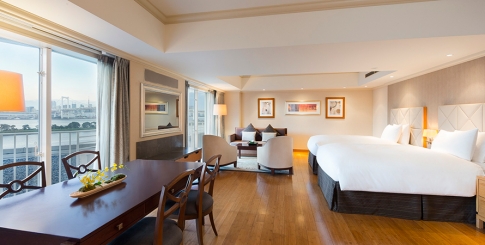
The comfort of a sofa, the texture of the bed, the quality of the light coming in by the window—placing yourself in a space different from your everyday one quietly updates your own standards of comfort.
Why do people stay at a particular hotel? Because it helps them recalibrate their distance from everyday life and shift their perspective in a vivid, tangible way.
When you stay within a city but step back far enough to take in the whole view, the landscape you thought you knew begins to look entirely different.
Tokyo, too, is a city made up of many layered stories. Where you place yourself changes how the city appears. In that sense, the waterfront is symbolic.
It is close to central Tokyo, yet it also offers a sweeping, open view of the city, including the sea and sky. From there, as you head back into town, you are entering a new version of Tokyo that is uniquely your own.
Hilton Tokyo Odaiba is not simply a hotel for “consuming” Tokyo. It can become a starting point for discovering your own relationship to the city.
The extraordinary is never necessarily far away. What matters is how you choose your distance and that choice redefines the trip—and, eventually, how everyday life itself comes into focus. Sometimes Tokyo is too close to see clearly. That is why there is value in taking the time to step back and look at it from a different angle. Hilton Tokyo Odaiba is a hotel designed for exactly that: a place from which to take in Tokyo, not just as a backdrop, but as a living landscape.


