















Tokyo Stillness
See Tokyo, differently.
History, Culture & Artisans 2026.10.23
From a Single Sheet of Paper, a World Unfolds—Discovering the Art of Origami at Ochanomizu Origami Kaikan
Before your eyes, a single sheet of paper transforms into a bird, a flower, or a dancing figure. Watching that transformation, you begin to realize origami isn't just a childhood pastime; it is an art form that fits in the palm of your hand.
Museums aren’t the only places to experience art in Tokyo. At Ochanomizu Origami Kaikan, visitors can explore origami exhibitions, shop for washi paper, and, depending on the timing, observe artisans at work in the paper-dyeing studio or catch a live origami demonstration. Surprise and delight need no translation. Here, working with paper offers a hands-on opportunity to discover the depth of Japanese culture.
Origami: An Art That Needs No Translation
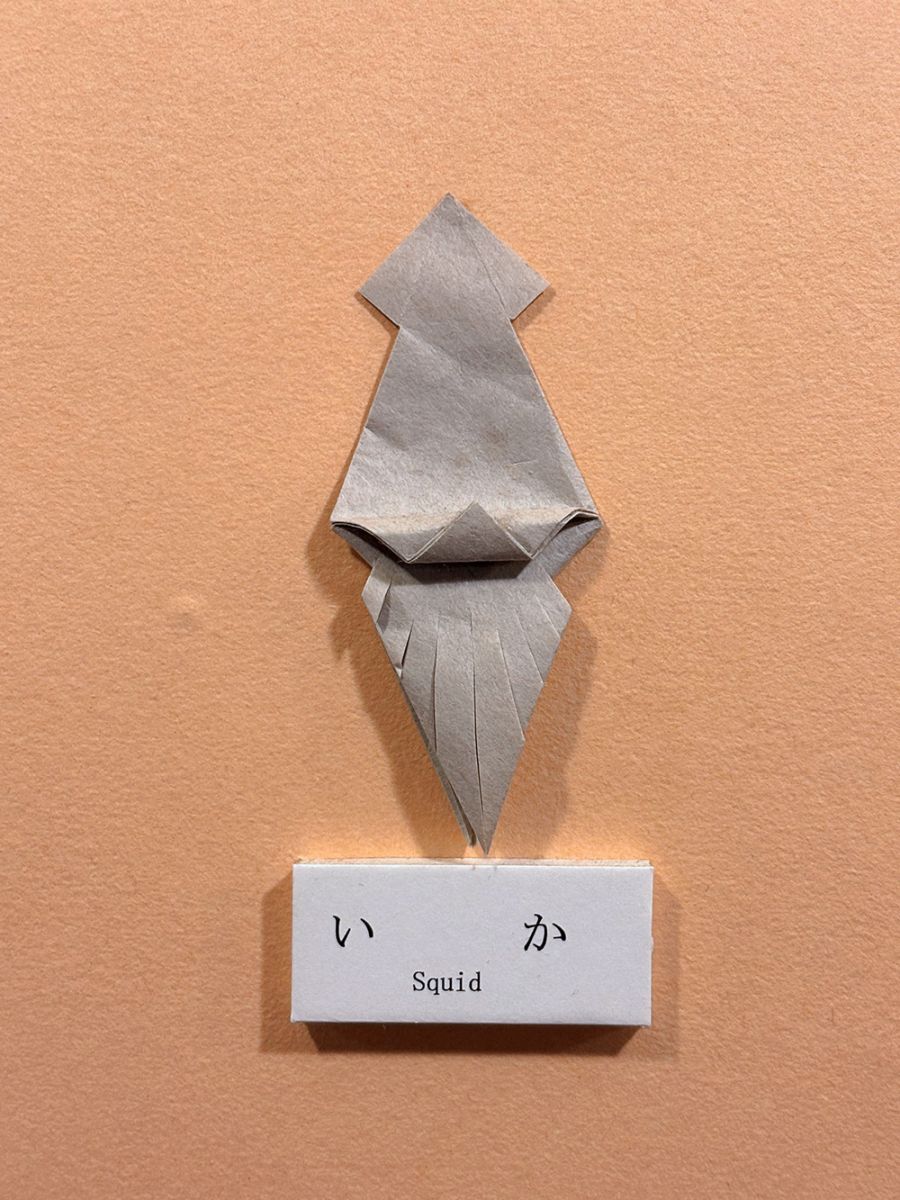
Origami may be familiar around the world, but there is far more to it than most people realize. Traditional forms include cranes and paper balloons, while other works can be extraordinarily intricate, depicting animals and dinosaurs. Origami can be play, craft, and a design discipline built on mathematical structure.
Ochanomizu Origami Kaikan offers a window into this creative world. From Hilton Tokyo Odaiba, you can reach Ochanomizu by train or taxi. A visit to the museum can be conveniently combined with stops in Ueno, Kanda Myojin Shrine, or Yushima Seido, making it a wonderful addition to a leisurely half-day exploring Tokyo’s cultural side.
Discovering Colors and Textures of Paper
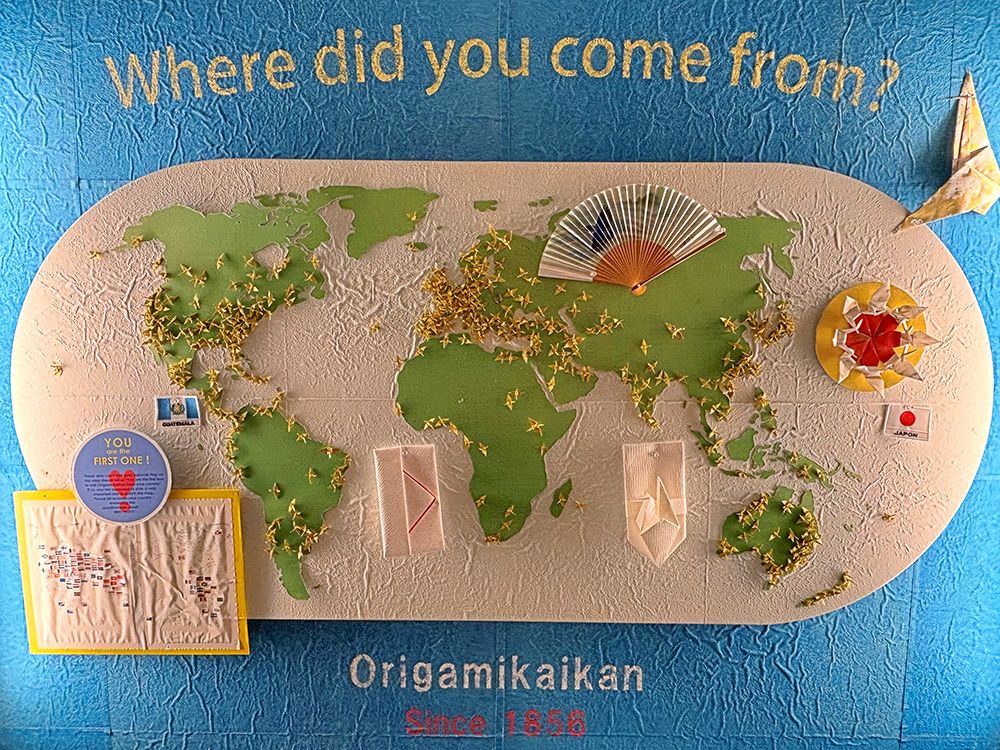
Origami Kaikan traces its roots to a company founded in 1858 that specialized in dyed paper and chiyogami, decorative Japanese paper. Today, visitors come here to discover the many possibilities of washi, origami, chiyogami, and hand-dyed paper.
Hiromi Yoshihara, who handles public relations for Origami Kaikan and our guide during our visit, says the number of international visitors has grown significantly in recent years. Some arrive on organized tours, others with guides in small groups, and many come on recommendations from their respective hotels.
They come from all over the world—the United States, Canada, France, China, India, and beyond. The mix varies with the season, but their shared interest in origami draws visitors from across the globe.
For many international travelers, the appeal isn’t limited to finished origami. The color, texture, and feel of the paper itself are just as compelling.
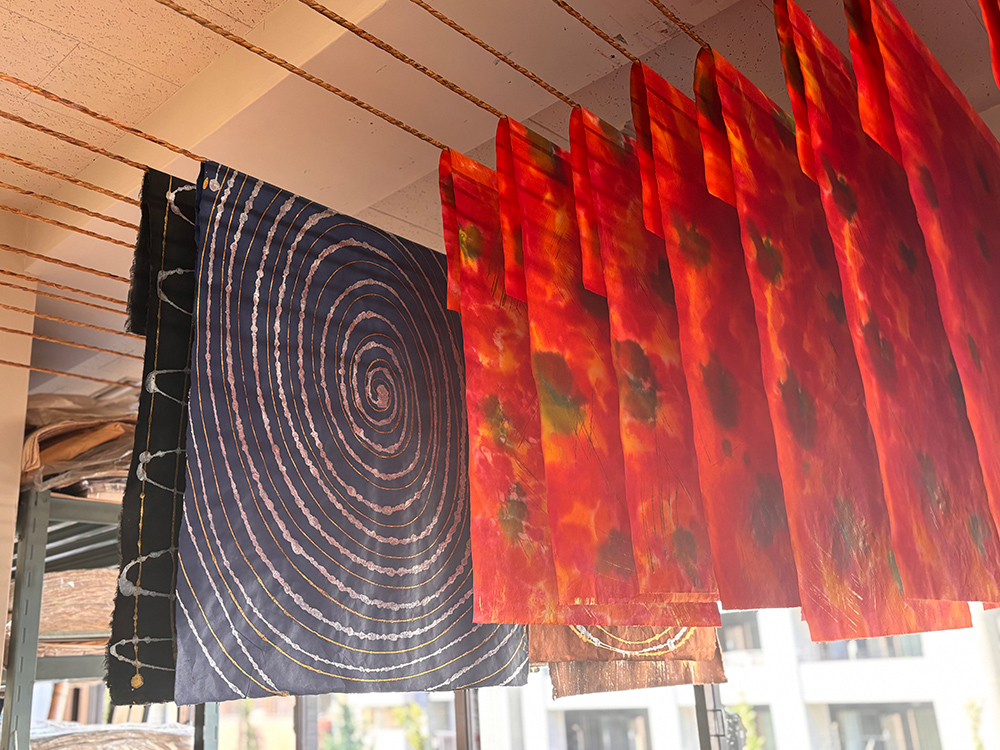
Much of the paper sold here is colored using dyeing techniques rather than printing. “The colors are completely different, and so is the feel of the paper,” Yoshihara explains. Some sheets are dyed on both sides to resemble wood grain; others are finished with a fine layer of gold or dyed multiple times. Unlike the mass-produced origami paper found in stationery stores, each sheet bears the marks of time and craftsmanship.
Before Paper Becomes Origami
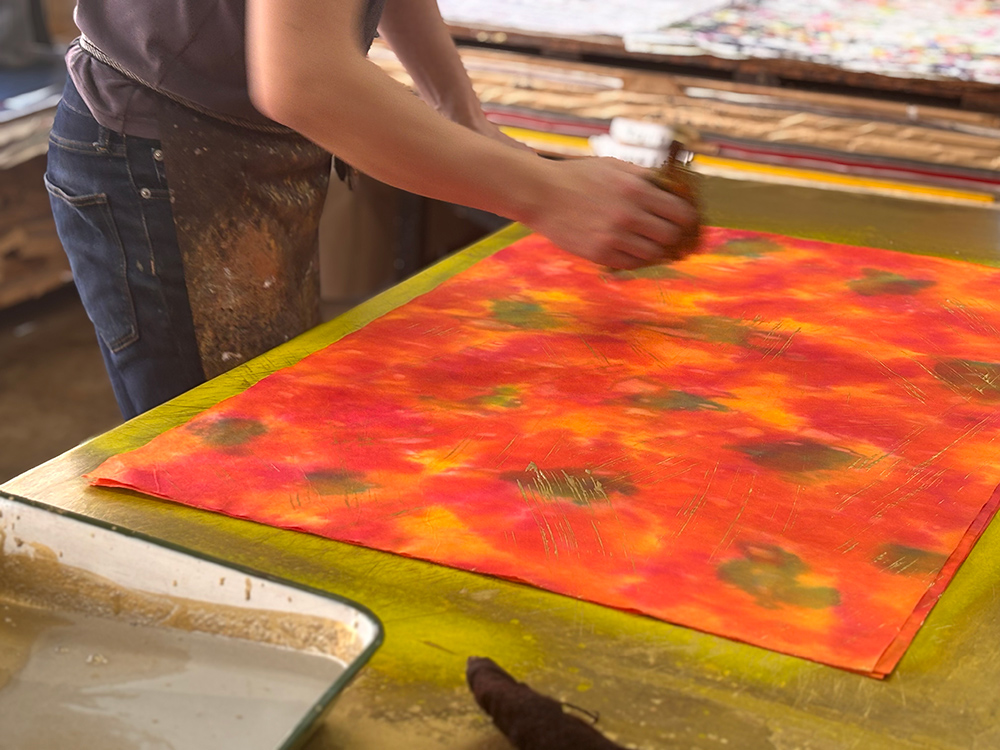
Part of what makes Origami Kaikan interesting is that there’s more to experience than the shop and gallery. If your timing is right, you might also witness activity in the building’s paper-dyeing studio. Since the institution grew out of a dyed-paper business, visitors get to see what happens before paper ever becomes origami.
During our visit, artisans were applying gold as a finishing touch to paper that had already been dyed. As gold was brushed across the surface, the paper gradually changed. The color took on a depth in the light, distinct from the uniform finish of printed paper.
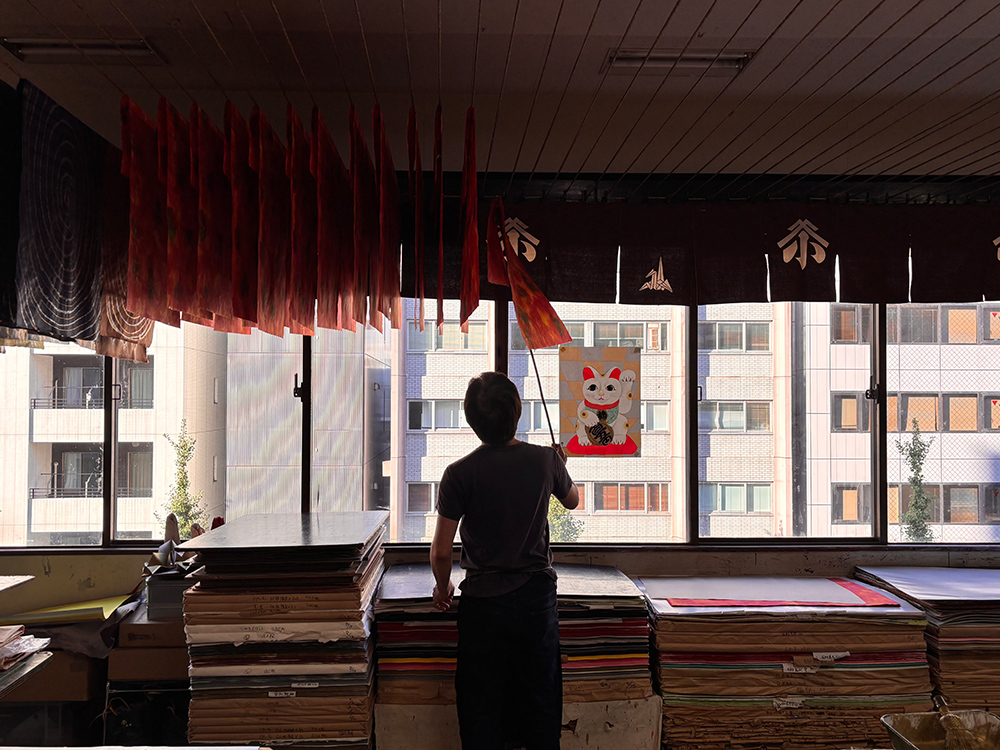
The finished sheets may be cut into squares and sold as origami paper or kept in larger formats. Yoshihara notes that those creating more complex pieces often choose larger sheets. Washi is also more forgiving than ordinary paper for intricate folds: flexible and can often be refolded without tearing.
Once you begin to see paper differently, even a single unfolded sheet invites a closer look.
Director Kobayashi’s Demonstrations: Like a Little Magic Show
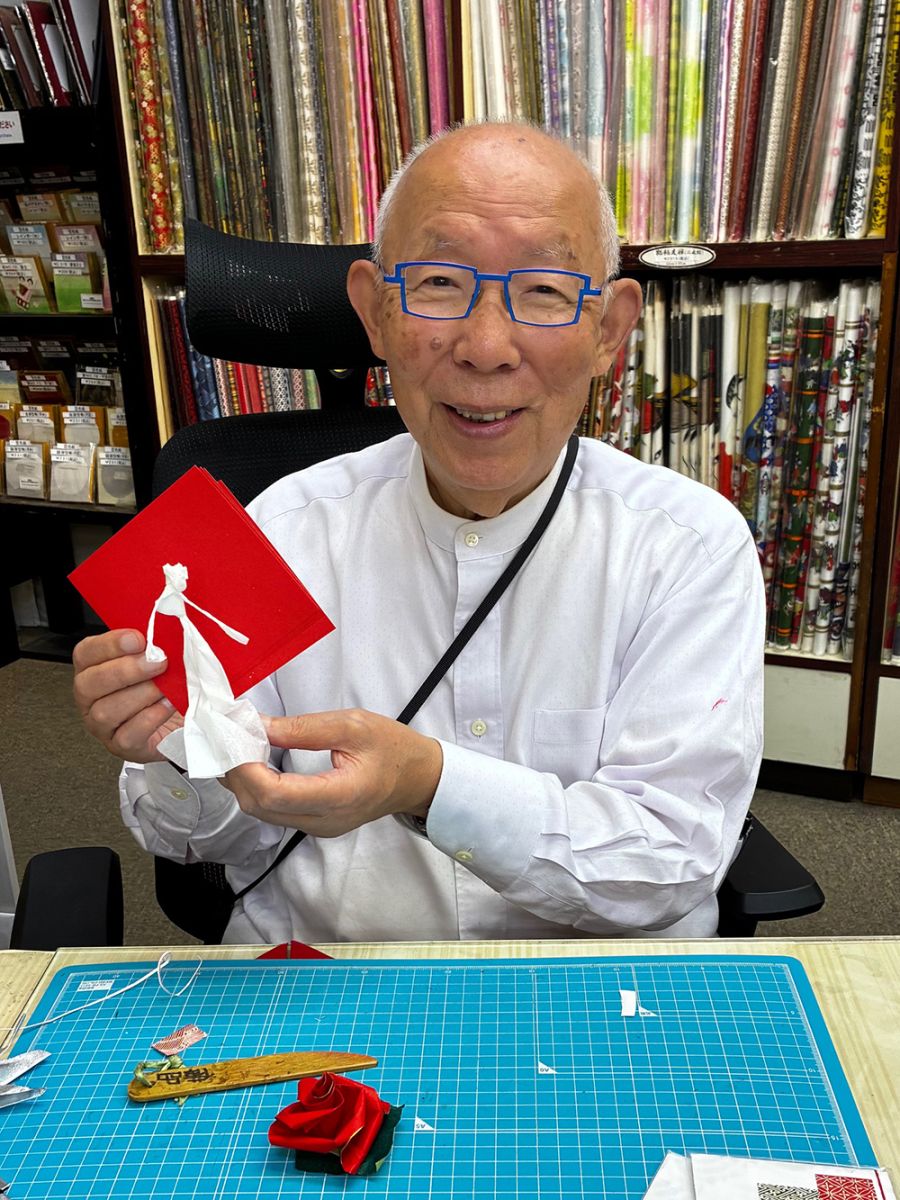
Director Kazuo Kobayashi demonstrates origami as everyday pieces of paper take on new forms before your eyes.
If you’re lucky, a visit to Origami Kaikan may include an origami demonstration by its director, Kazuo Kobayashi.
Kobayashi is the fourth-generation head of the long-established dyed-paper and chiyogami company that operates Origami Kaikan. For years, he has shared the beauty of origami and washi culture with audiences across Japan and abroad. His demonstrations feel less like formal lessons in precise folding and more like short performances.
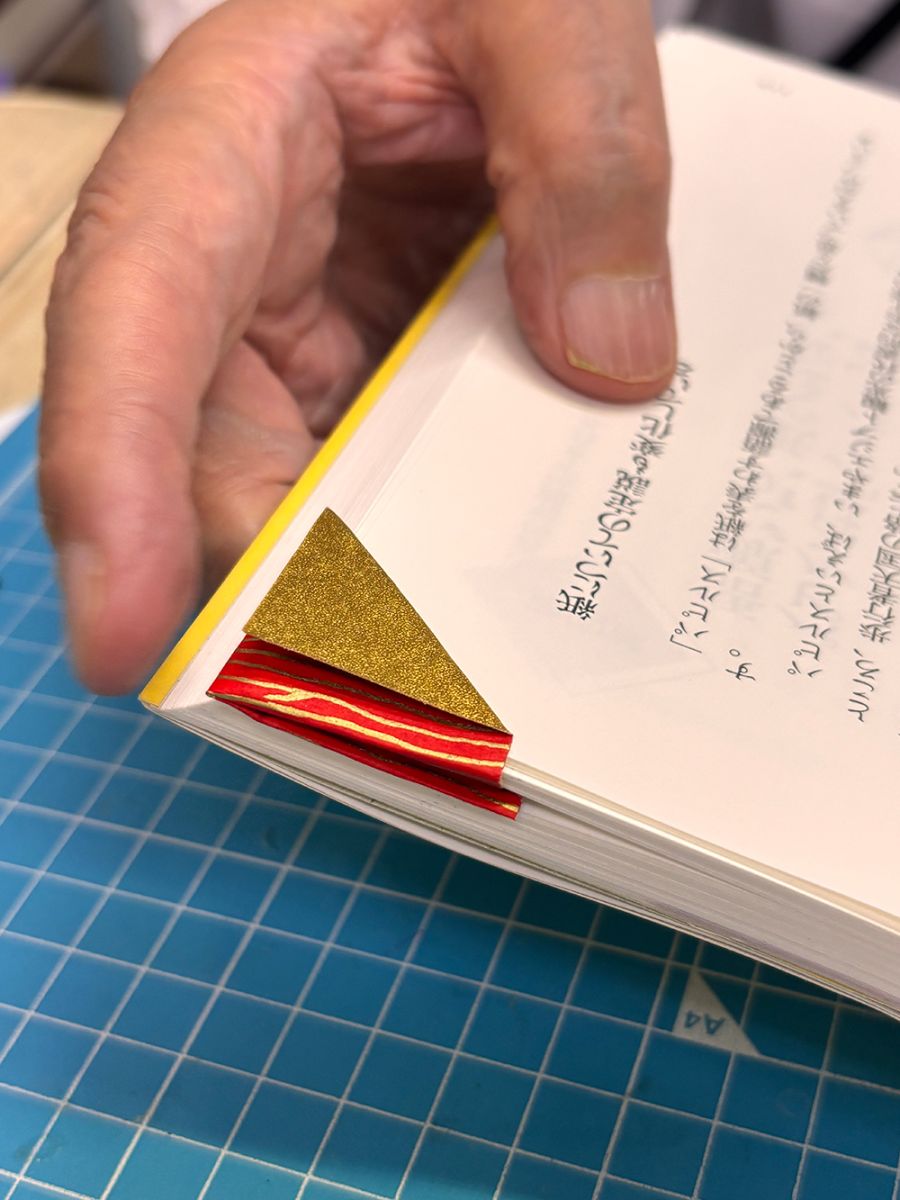
“It doesn’t have to line up perfectly,” he says, folding and twisting the paper as it quickly changes form. A napkin transforms into a ballerina. A triangle turns into a bookmark. A chopstick wrapper becomes a tiny chopstick rest. No special tools are required. Ordinary pieces of paper begin to take on new character in his hands.
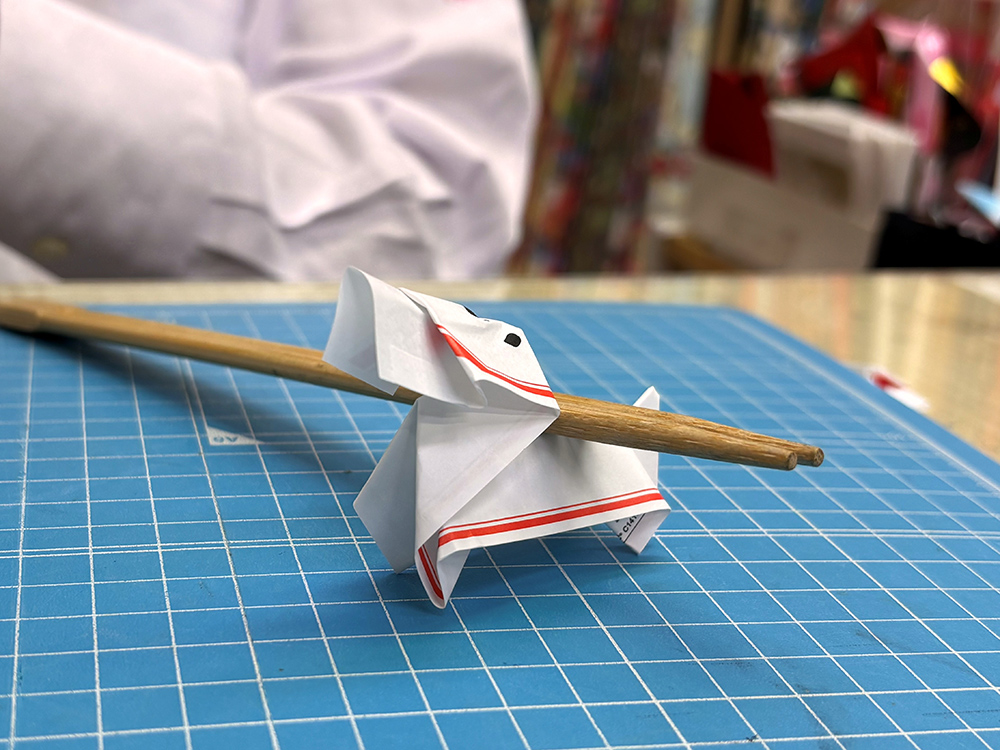
Part of the charm is the way Kobayashi adapts each demonstration to his audience. For visitors from Spain, a figure might become a flamenco dancer; for Brazilians, a samba dancer. The same piece of origami can take on a different personality depending on who is watching.
“You don’t need words,” Kobayashi says.
When paper transforms before your eyes, nationality and age hardly matter. People are surprised, they laugh, and reactions come naturally. Perhaps this immediacy is one reason origami communicates so easily across cultures.
Discovering the Essence of Origami in the Gallery and Shop
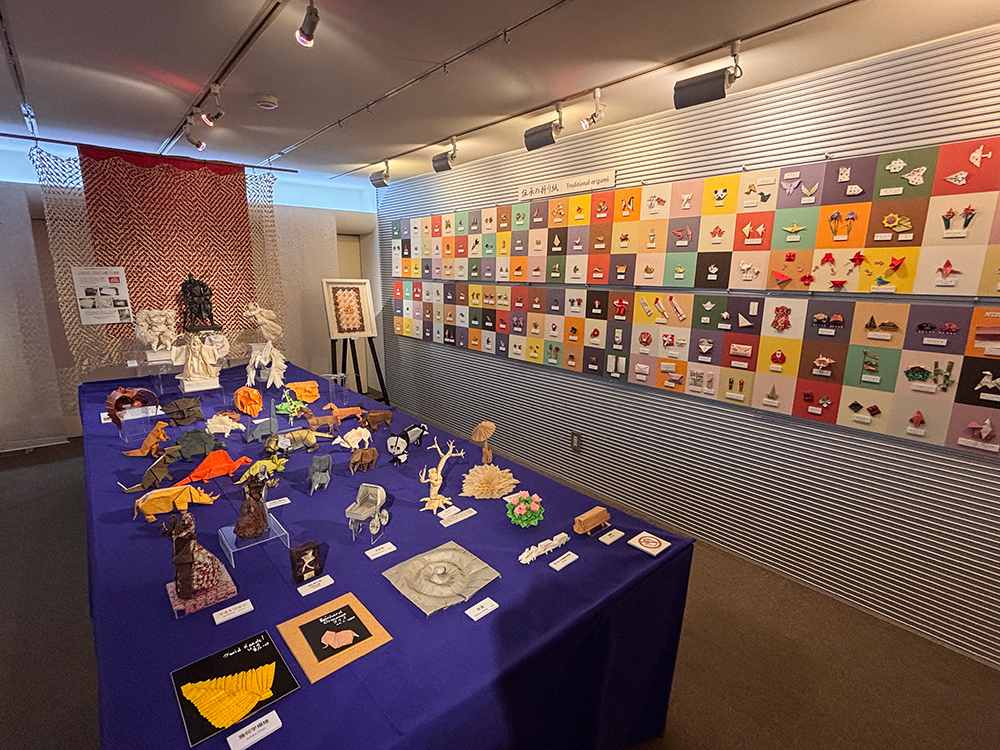
The gallery presents a wide range of works, from traditional origami to intricate pieces by international artists. Exhibitions change periodically.
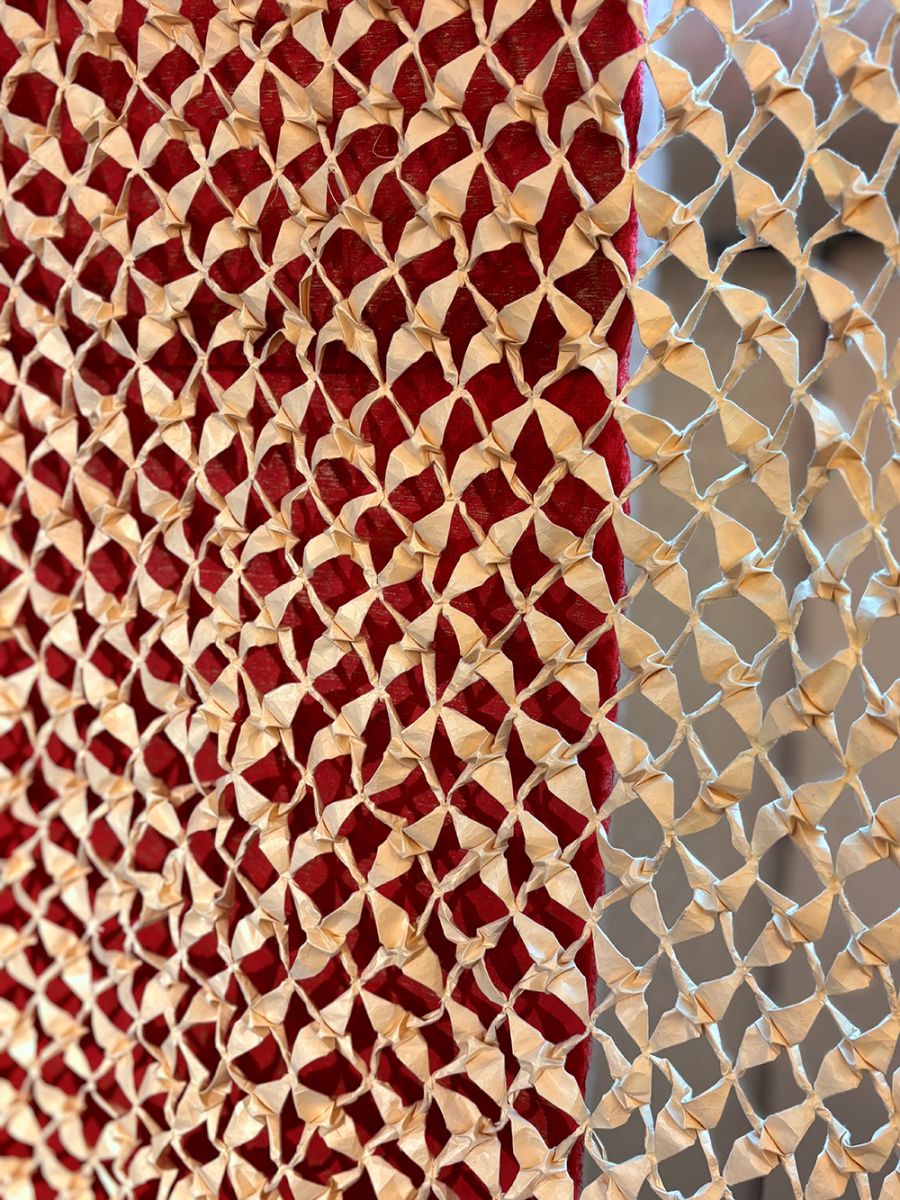
One particularly memorable style is renzuru, where multiple cranes are folded from a single sheet of paper while remaining connected.
The technique dates back to the Edo period, and different cuts and folds produce different configurations. Several cranes emerge while the original sheet stays intact. Once you understand how it works, it becomes clear that origami is more than an exercise in dexterity—it also involves concepts of structure, design, and mathematics.
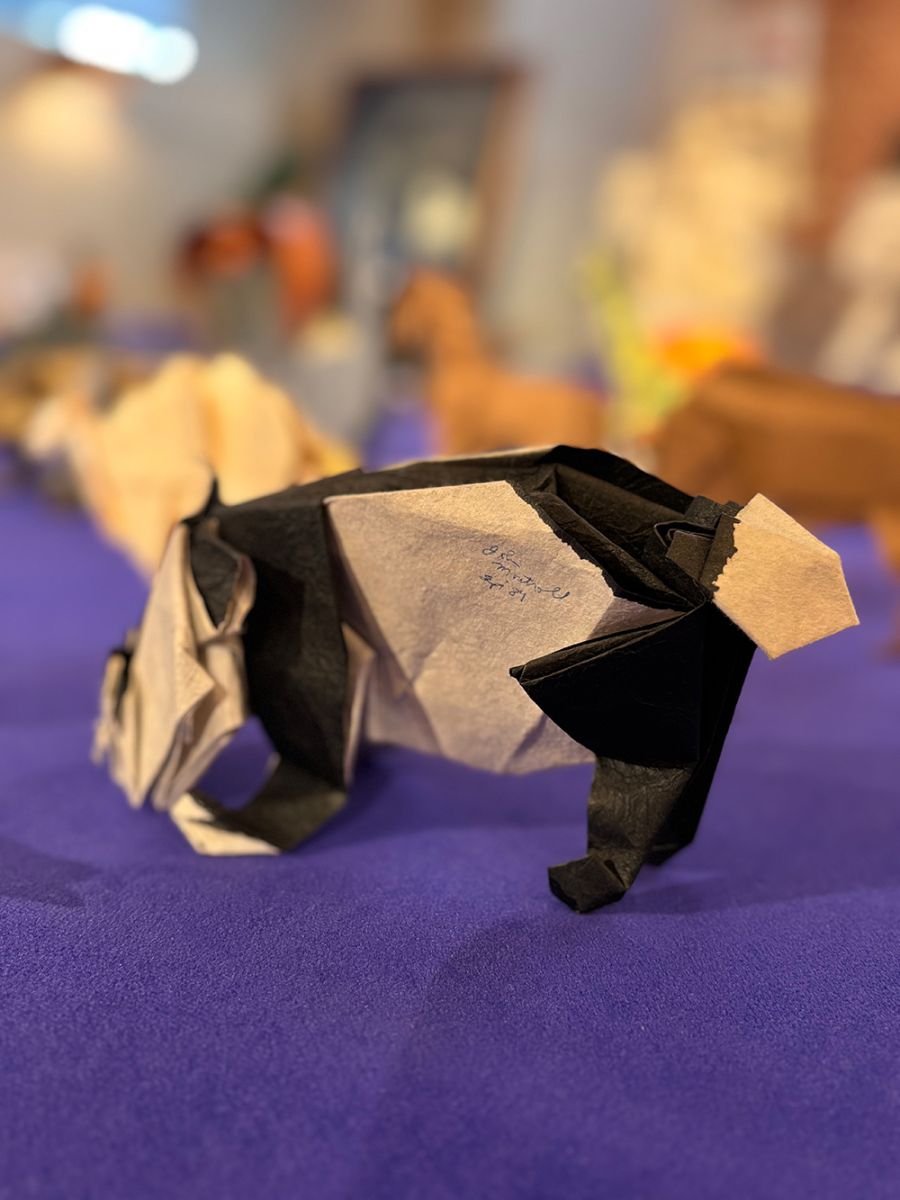
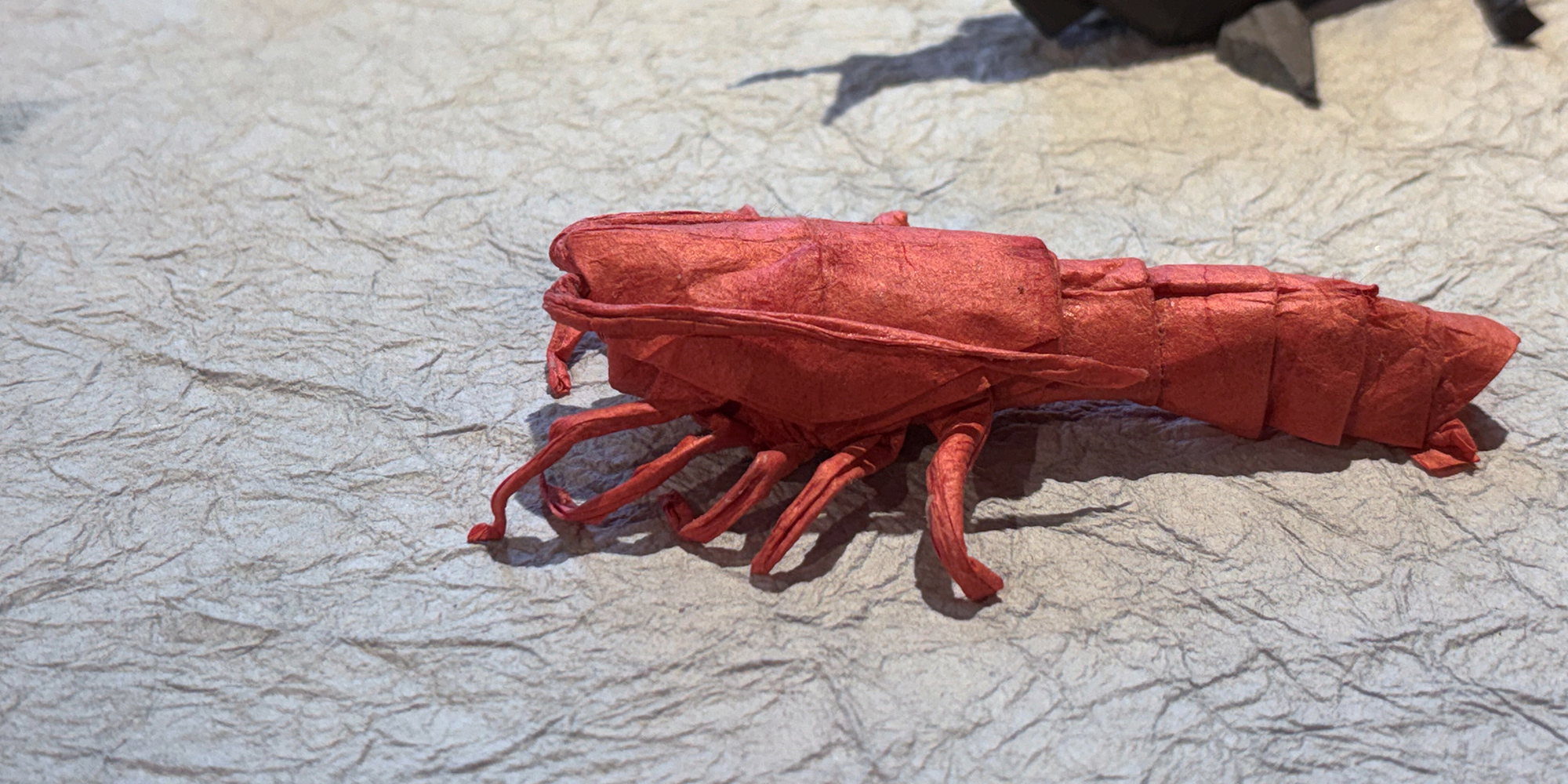
Elsewhere, you may discover highly detailed animals, dinosaurs, and other complex forms. Yoshihara notes that many dedicated origami enthusiasts overseas attempt such works, and some visit Origami Kaikan specifically in search of suitable paper. The gallery also displays pieces by artists from Europe, the United States, China, and elsewhere, revealing how origami has spread and evolved around the world.
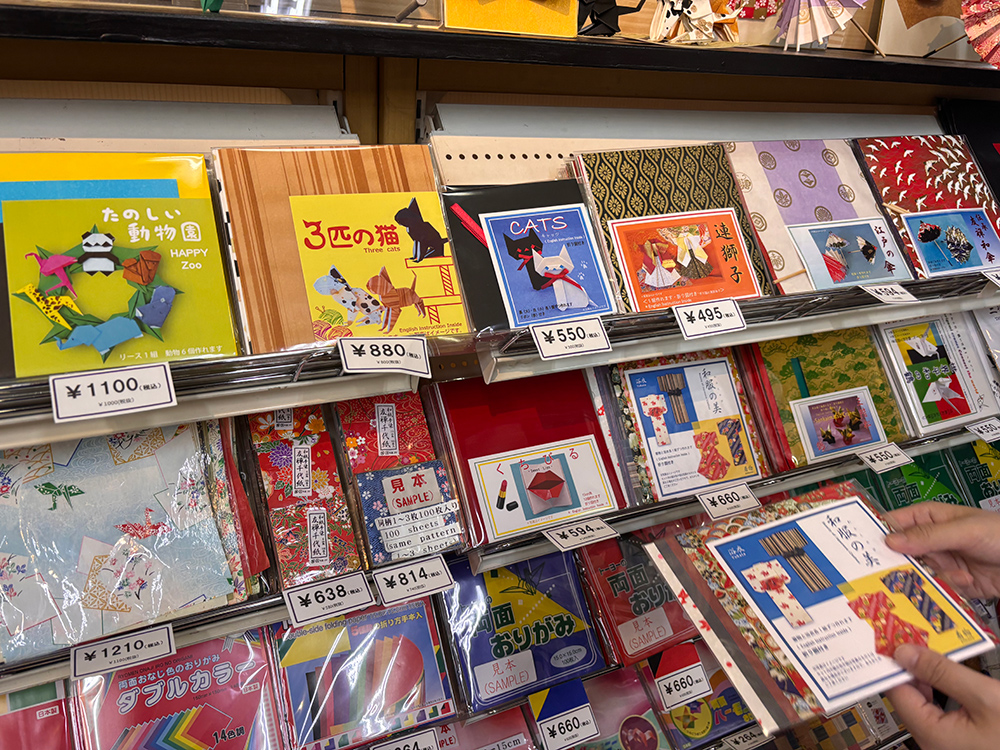
The shop carries origami paper, washi, chiyogami, instructional books, and kits. Books with English instructions and kits that pair paper with folding diagrams are particularly popular with international visitors. Choosing from the array of colors and patterns—and deciding which ones to take home—is part of the pleasure.
Back at the Hotel: Folding a Pair of Lips
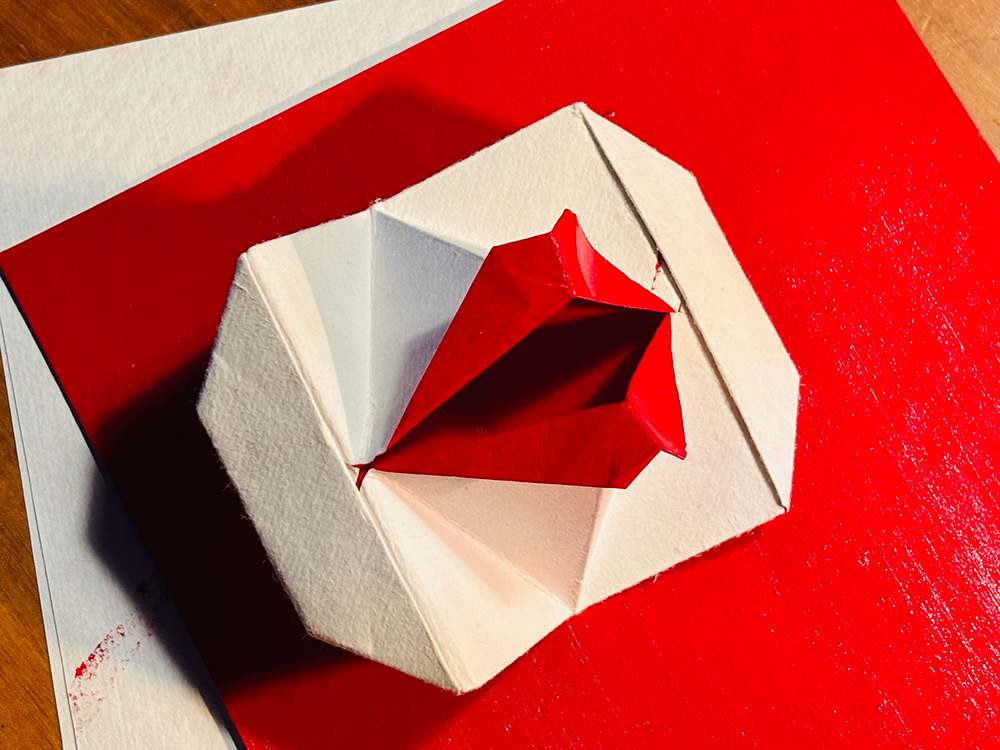
Back at Hilton Tokyo Odaiba, unfold the origami paper you chose at Origami Kaikan. With Tokyo Bay visible beyond the window, memories of the dyed paper, Kobayashi’s demonstration, and the works in the gallery come flooding back as you begin to fold.
We tried the “lips” origami kit. With every fold, the flat sheet gradually takes shape. Simply following that transformation is quietly absorbing. Whether every fold comes out perfectly matters less than the joy of making something with your own hands.
A few minutes spent folding a single sheet of paper creates a small pocket of unhurried time on your journey.
Ochanomizu Origami Kaikan
1-7-14 Yushima, Bunkyo-ku, Tokyo
Admission is free. Please check the official website for current opening hours, closing days, gallery exhibitions, classes, demonstrations, and studio-viewing information.


